
Convoy
Overview
Road trips are best with people — but coordinating a convoy of cars, aligning on stops, pacing the drive, and staying connected across vehicles is surprisingly hard. Convoy is a mobile app and service experience designed to make group road trips feel effortless, letting everyone stay in sync from planning to the final destination.

History
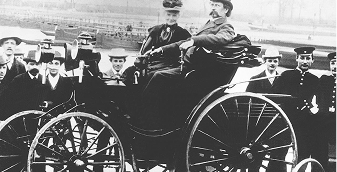
The first recorded long-distance road trip in history, is Bertha Benz, her husband Karl Benz (The inventor of the first motor car) traveled from Mannheim to Pforzheim in the third experimental Benz motor car.
In the early 1900s, author William F. Dix could assert that the automobile had become nothing less than a "vacation agent" for motor-savvy Americans.
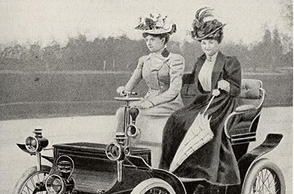

In recent years, after the pandemic, roadtrip has become a way of people enjoying their holidays once again.
Research
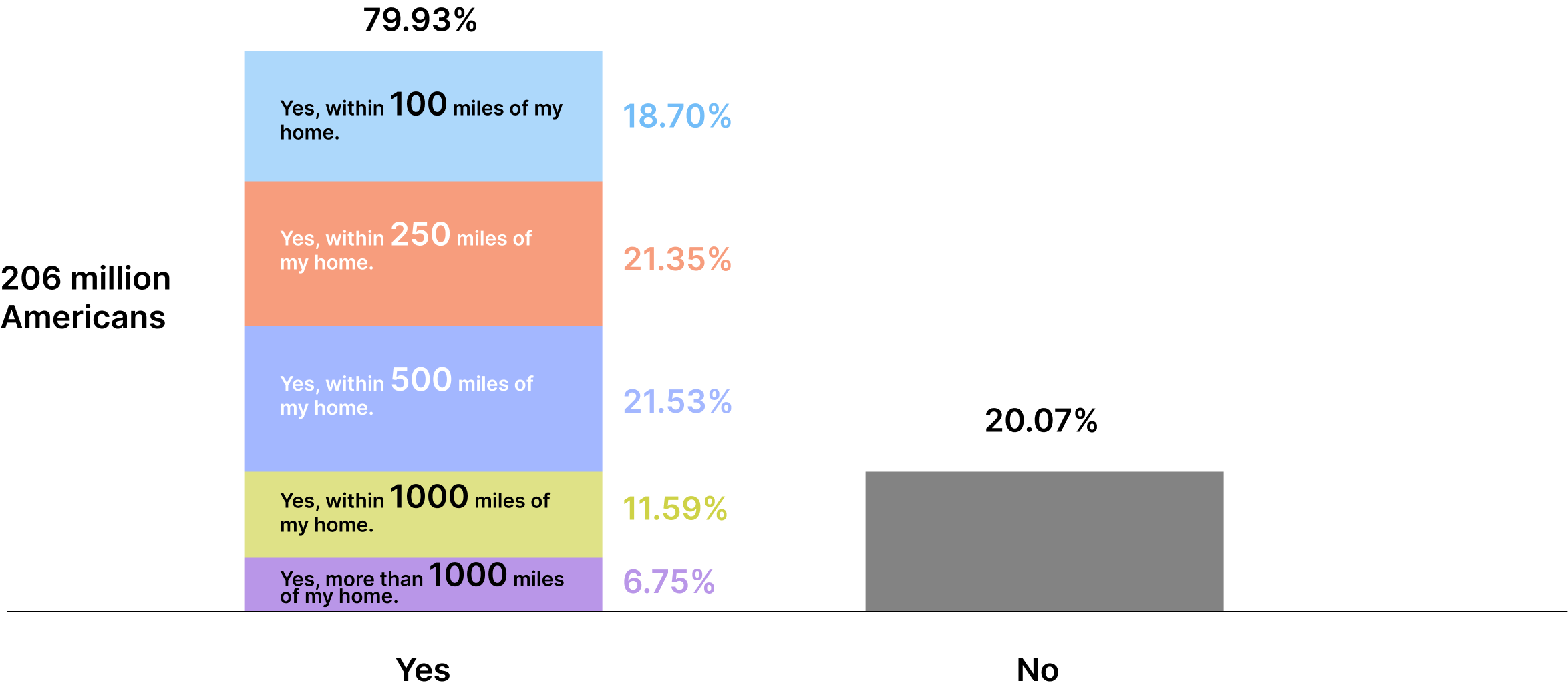
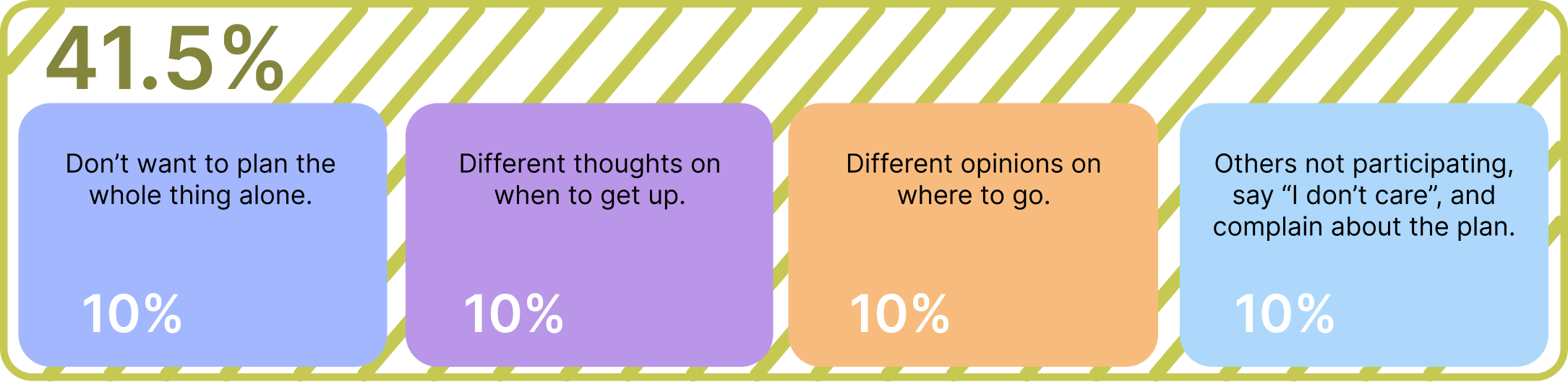
Before jumping into solutions, I wanted to understand the real friction points in group road trips. I surveyed participants and uncovered a consistent pattern: coordination breaks down not at the destination, but in the small moments in between.
User Persona
To ground the design decisions, I built a primary persona representing the typical group trip organizer — someone who takes on the invisible labor of coordination while also wanting to enjoy the trip themselves.

Pain Points
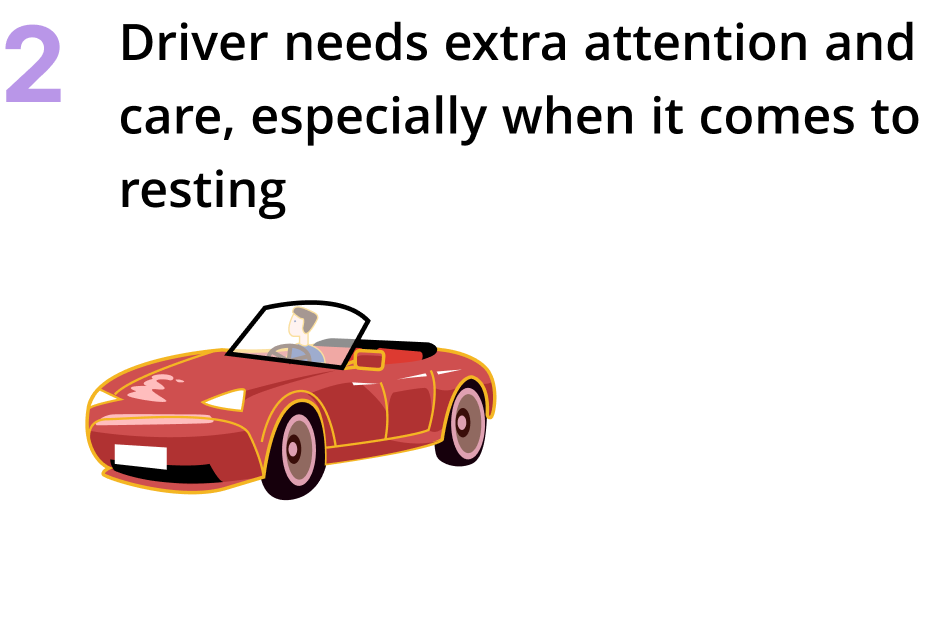
Four core pain points emerged consistently across participants, each revealing a different layer of coordination friction.



Ideation
With pain points clearly mapped, I moved into ideation. The challenge was to design something that works both as a planning tool before the trip and a live coordination layer during the drive — without requiring everyone to stare at their phone.
Service Blueprint
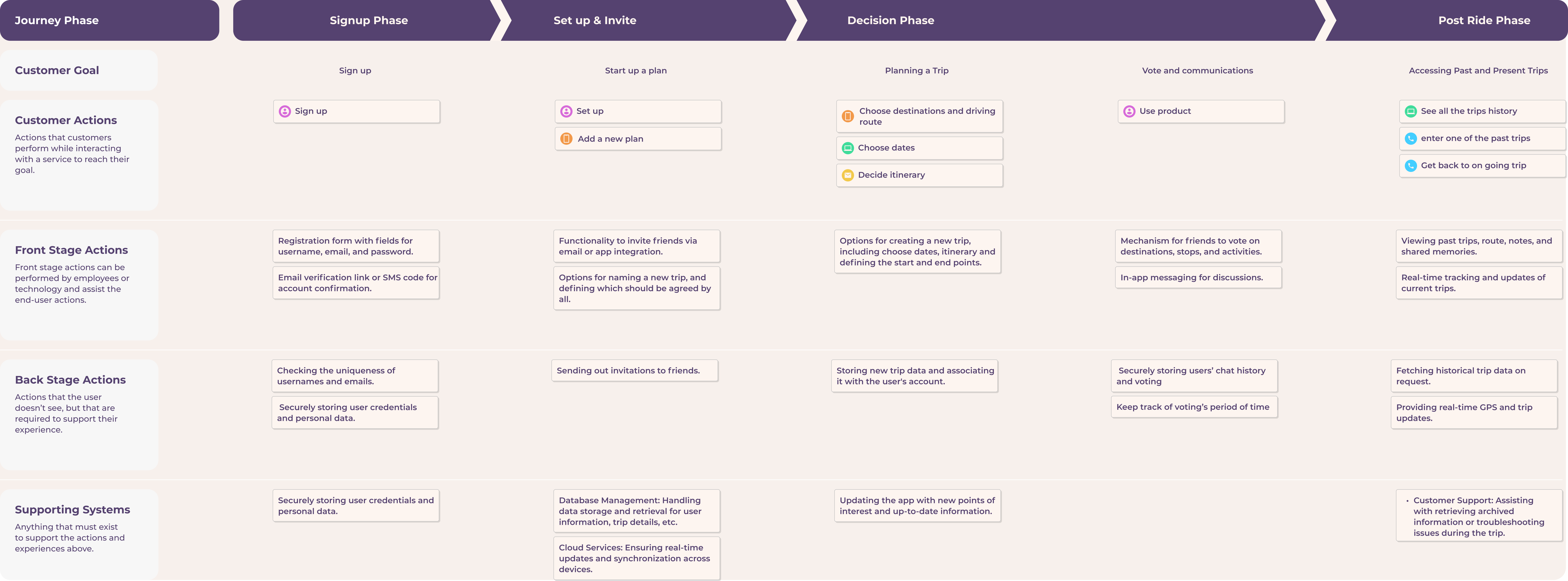
The service blueprint maps the full journey — from trip creation to arrival — across all actors: the organizer, group members, and the backend systems enabling real-time coordination. This helped ensure no touchpoint was left undesigned.
User Flows & Wireframes
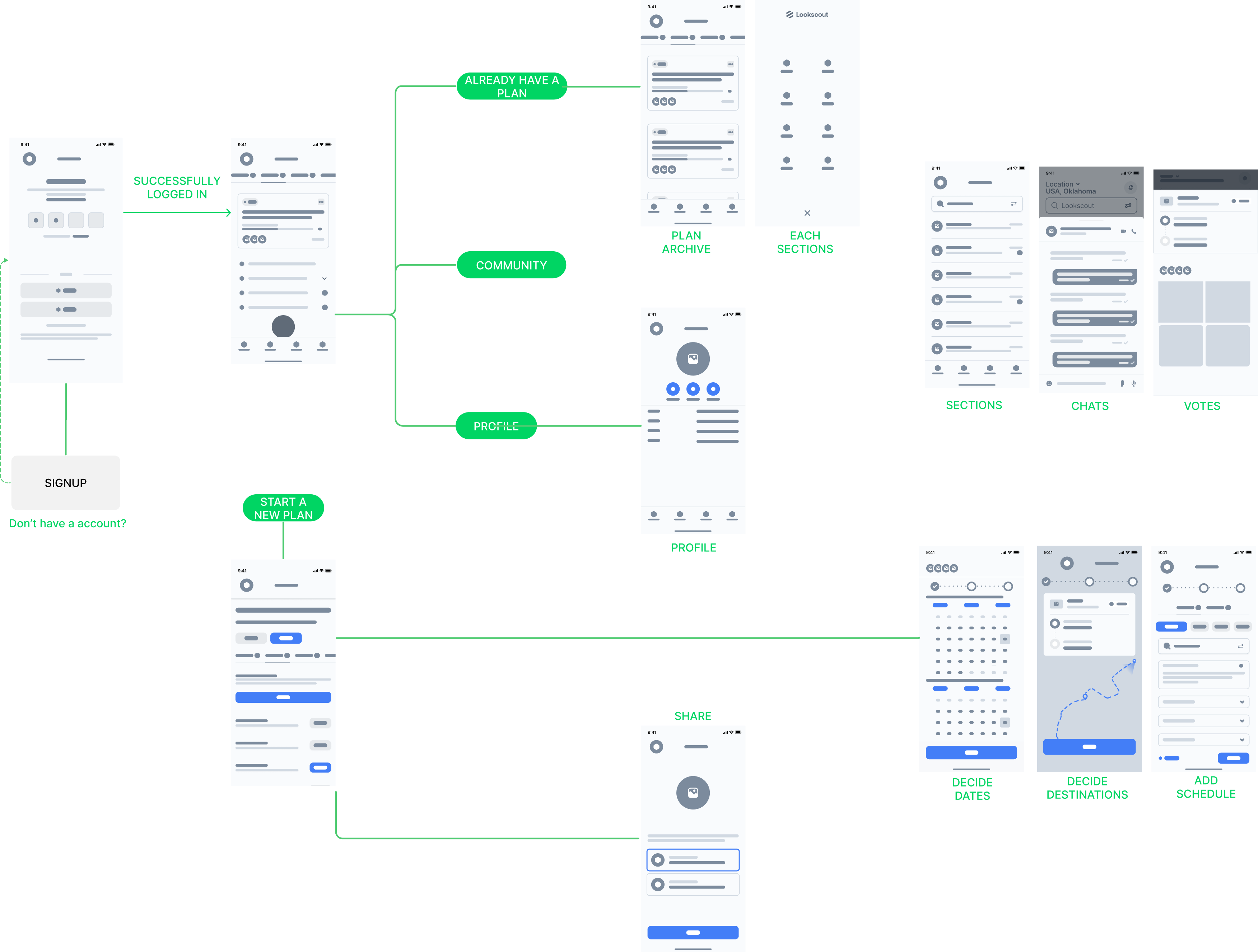
I mapped the key user flows — creating a convoy, joining one, proposing a stop, and receiving real-time alerts — then translated them into low-fidelity wireframes to test the structure before committing to visual design.
Design
With the structure validated, I moved into high-fidelity design. The visual language needed to feel energetic and adventurous while remaining legible in glance-and-go moments on the road.
Style Guide
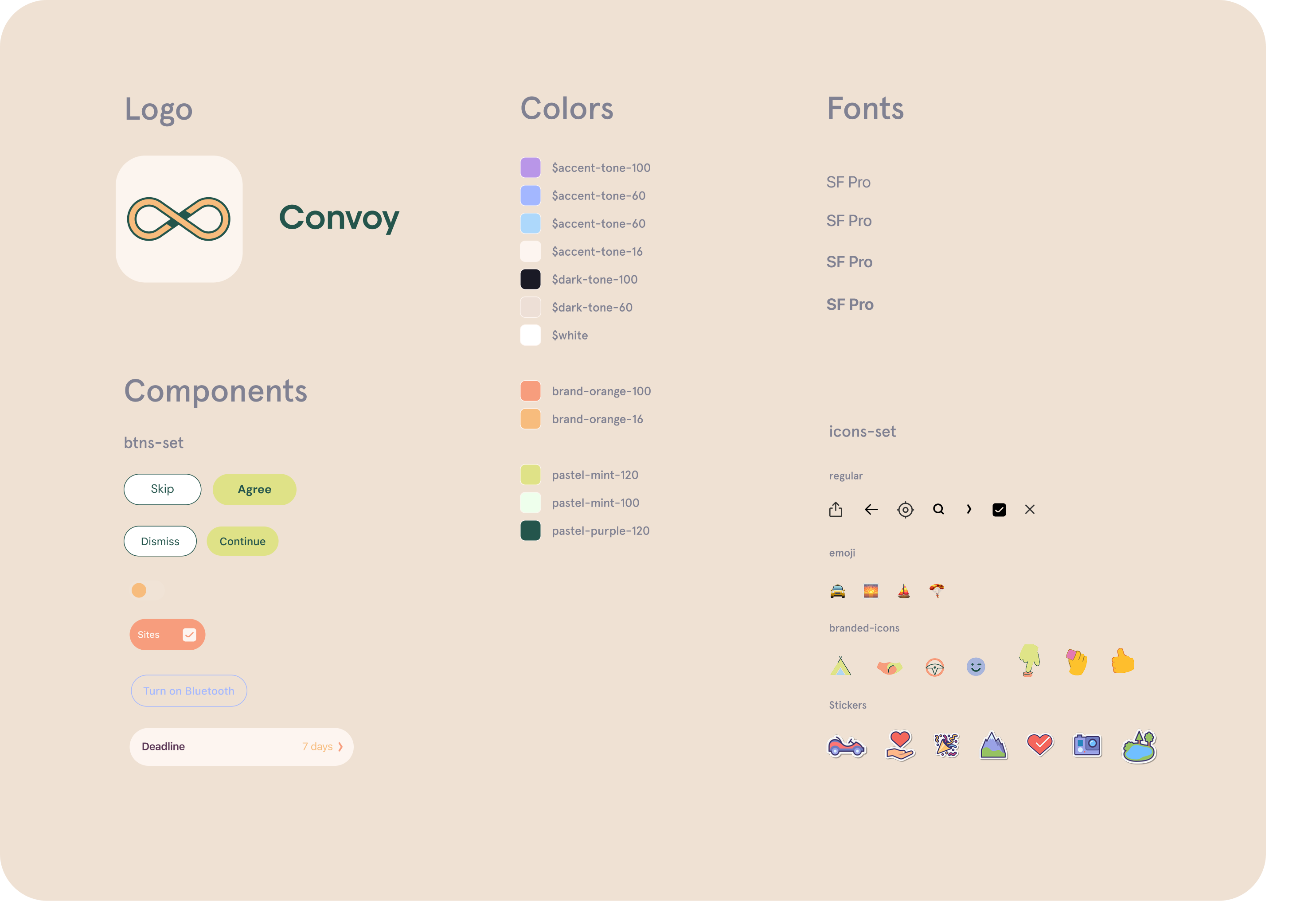
I built a style guide to maintain visual consistency across all screens — establishing a warm, earthy color palette that evokes open roads and natural landscapes, paired with a high-legibility type system.
High-Fidelity Screens
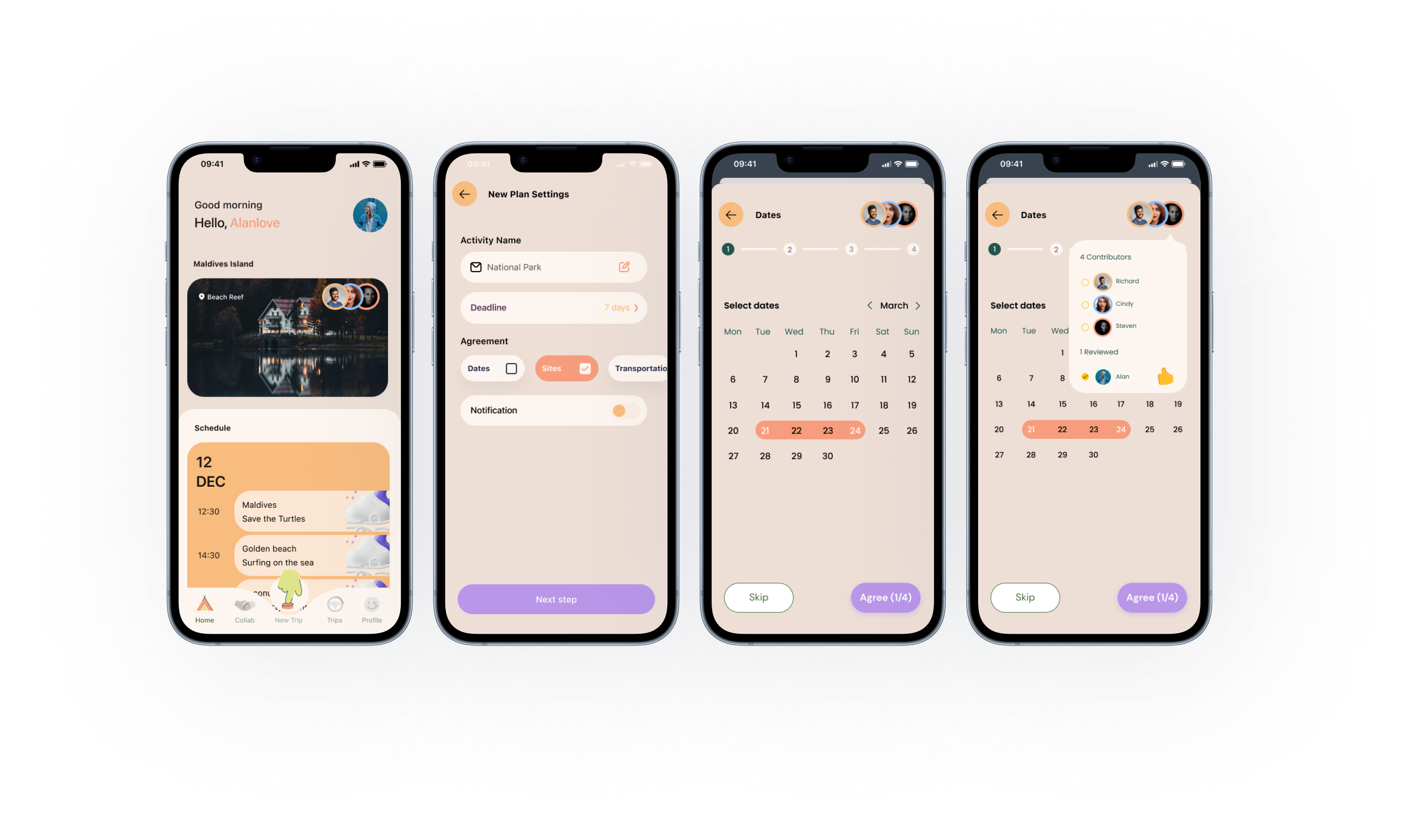
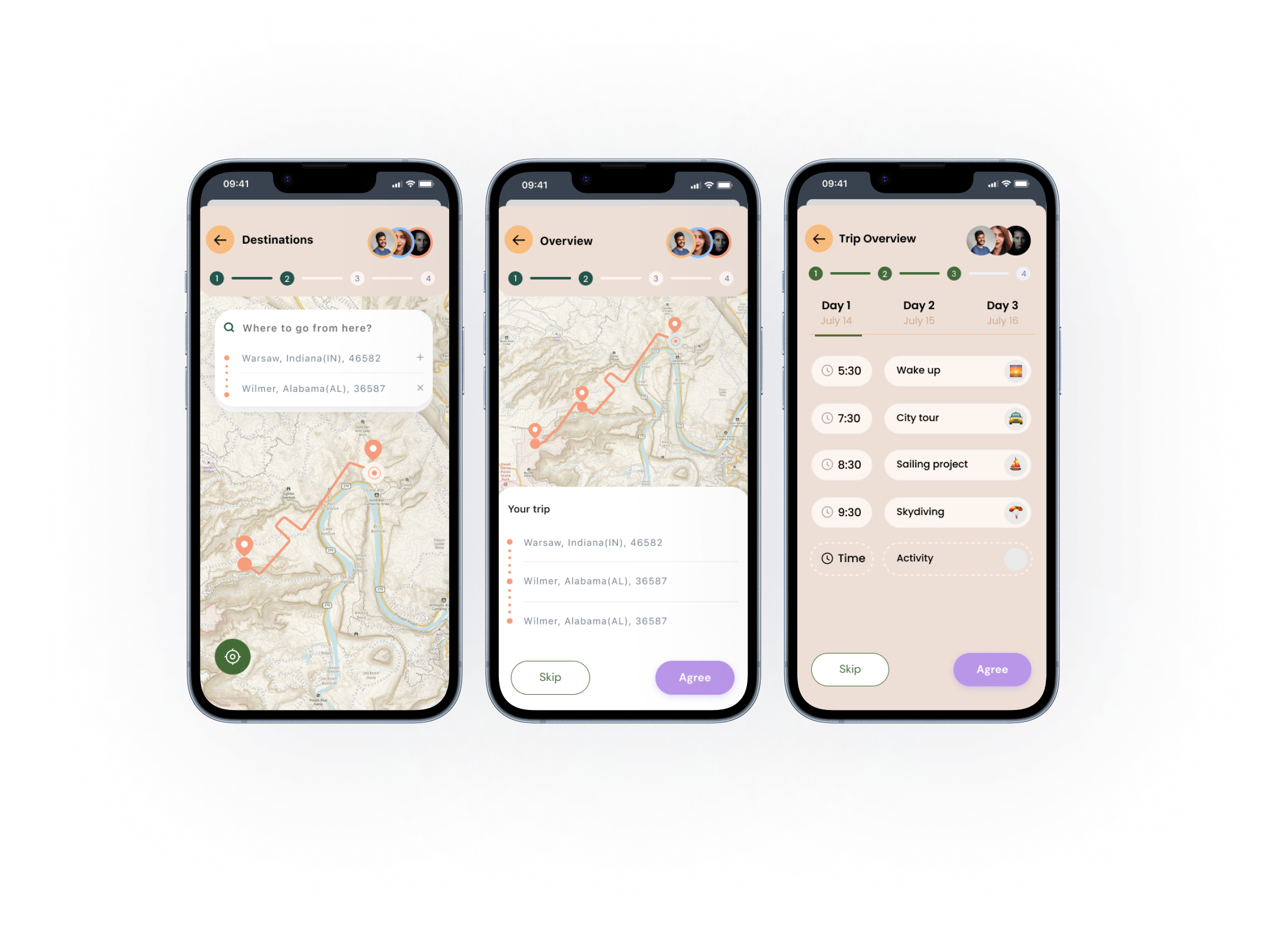
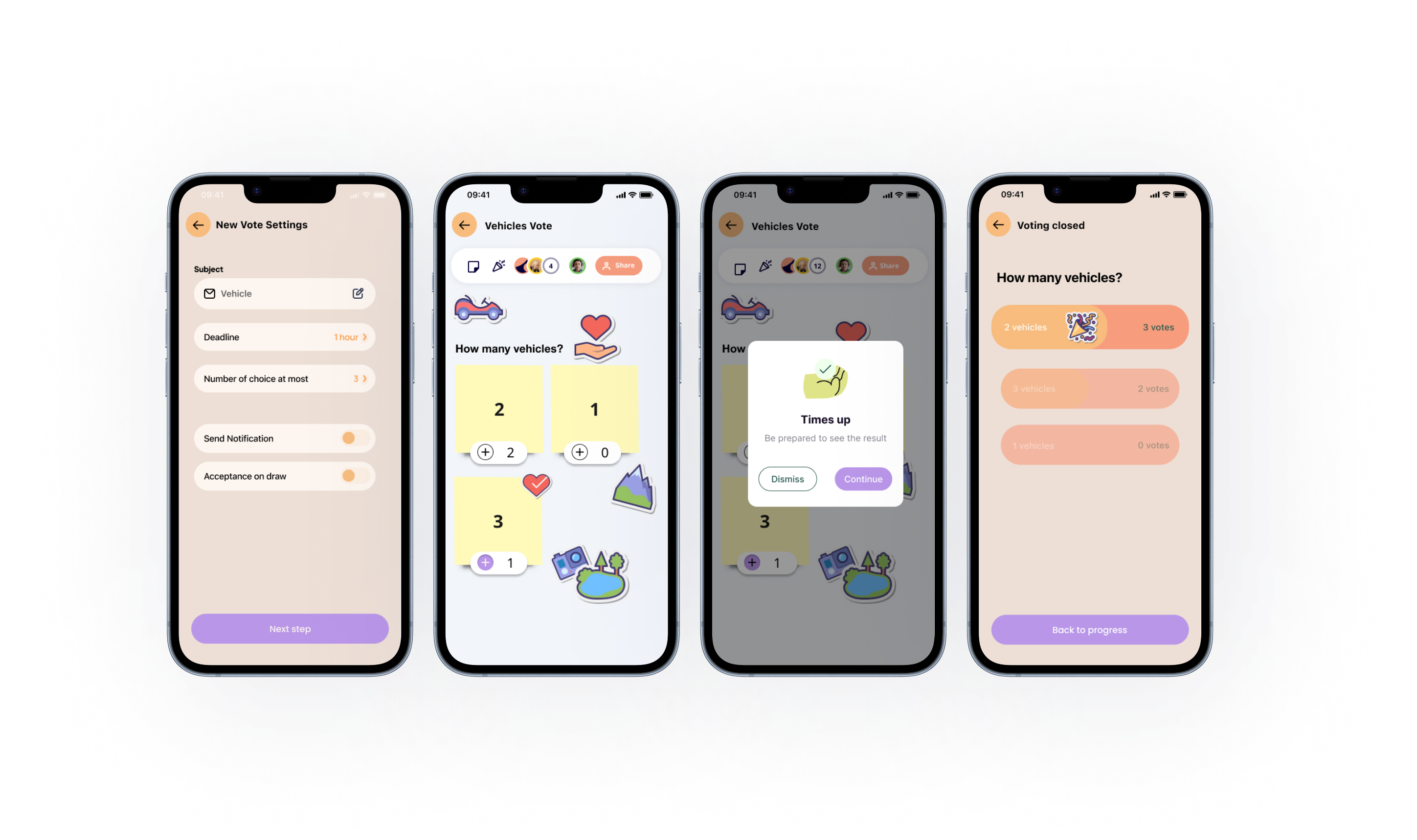
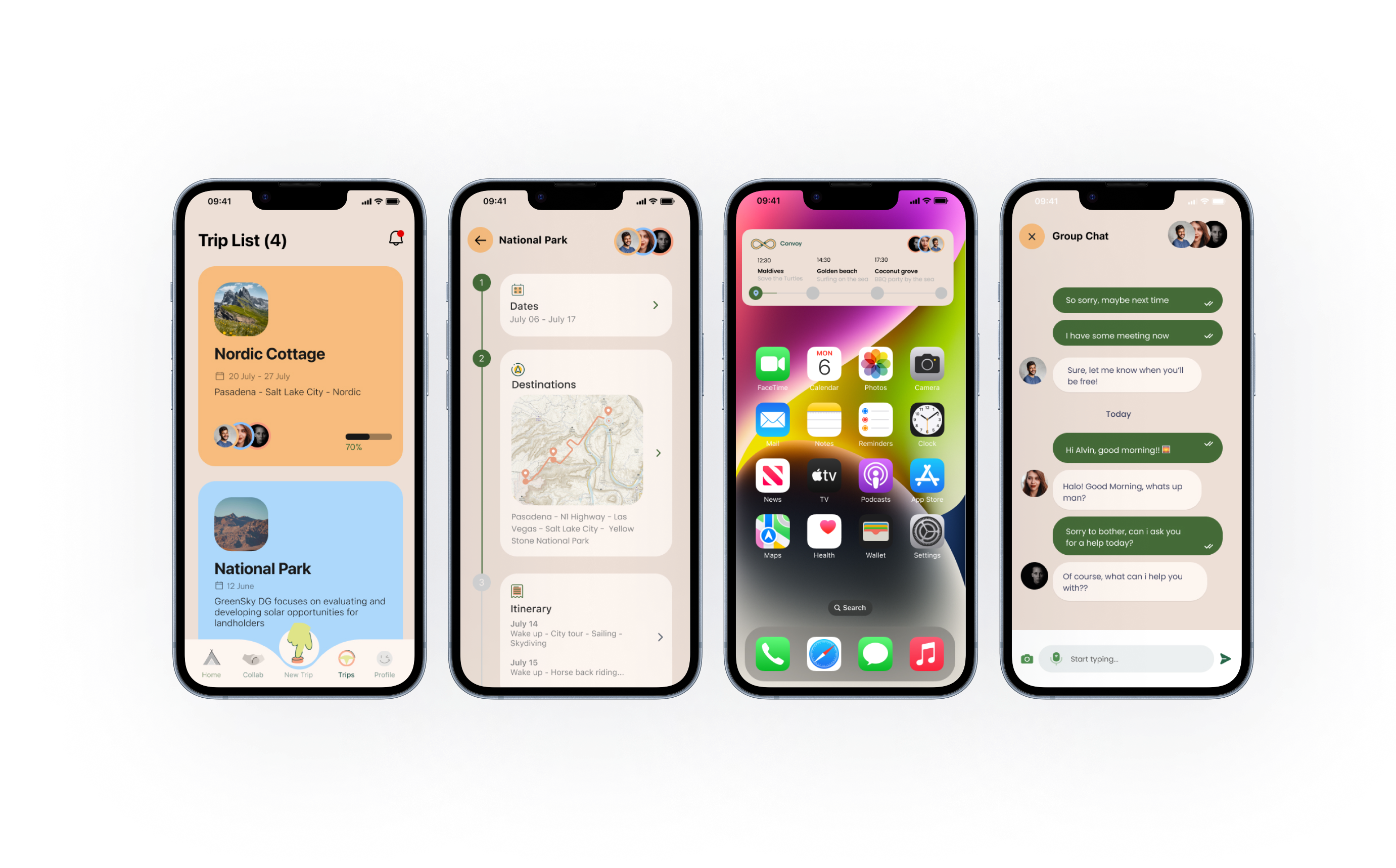
The final screens cover the three core experiences: Trip Planning (collaborative itinerary building), Live Convoy View (real-time group map), and Stop Coordination (voting on and proposing new stops mid-drive).
Outcome
User Testing & Feedback
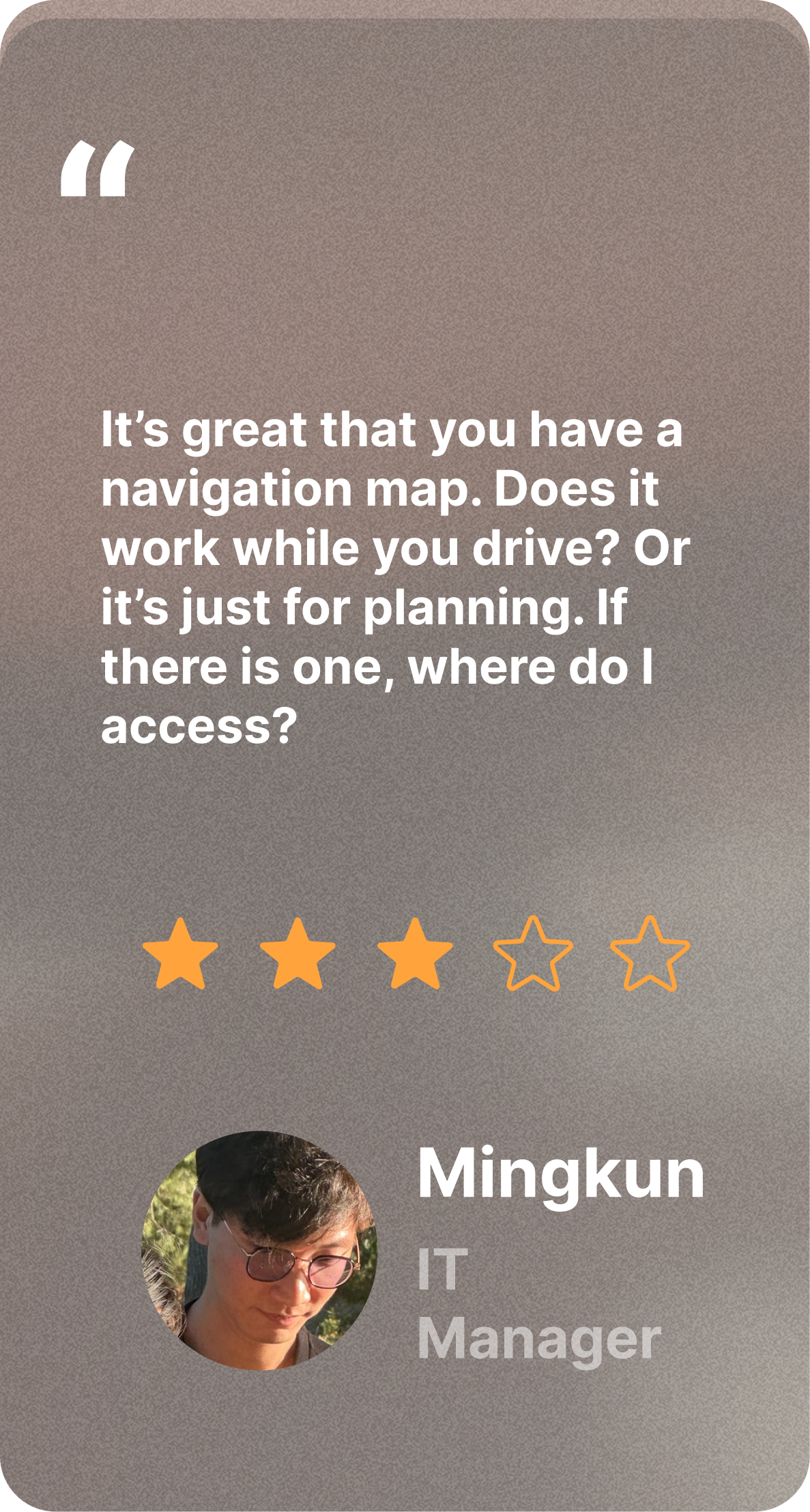
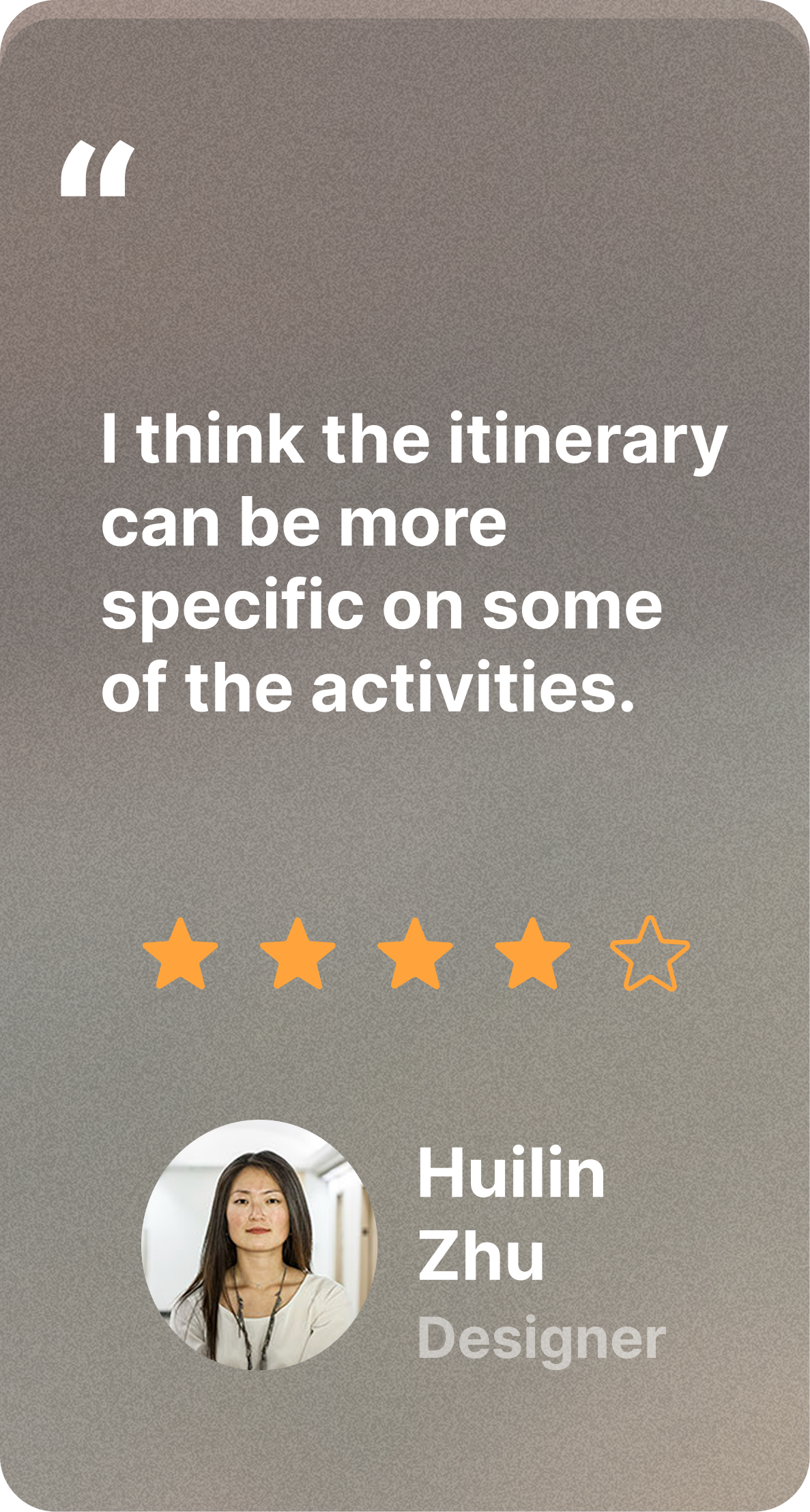
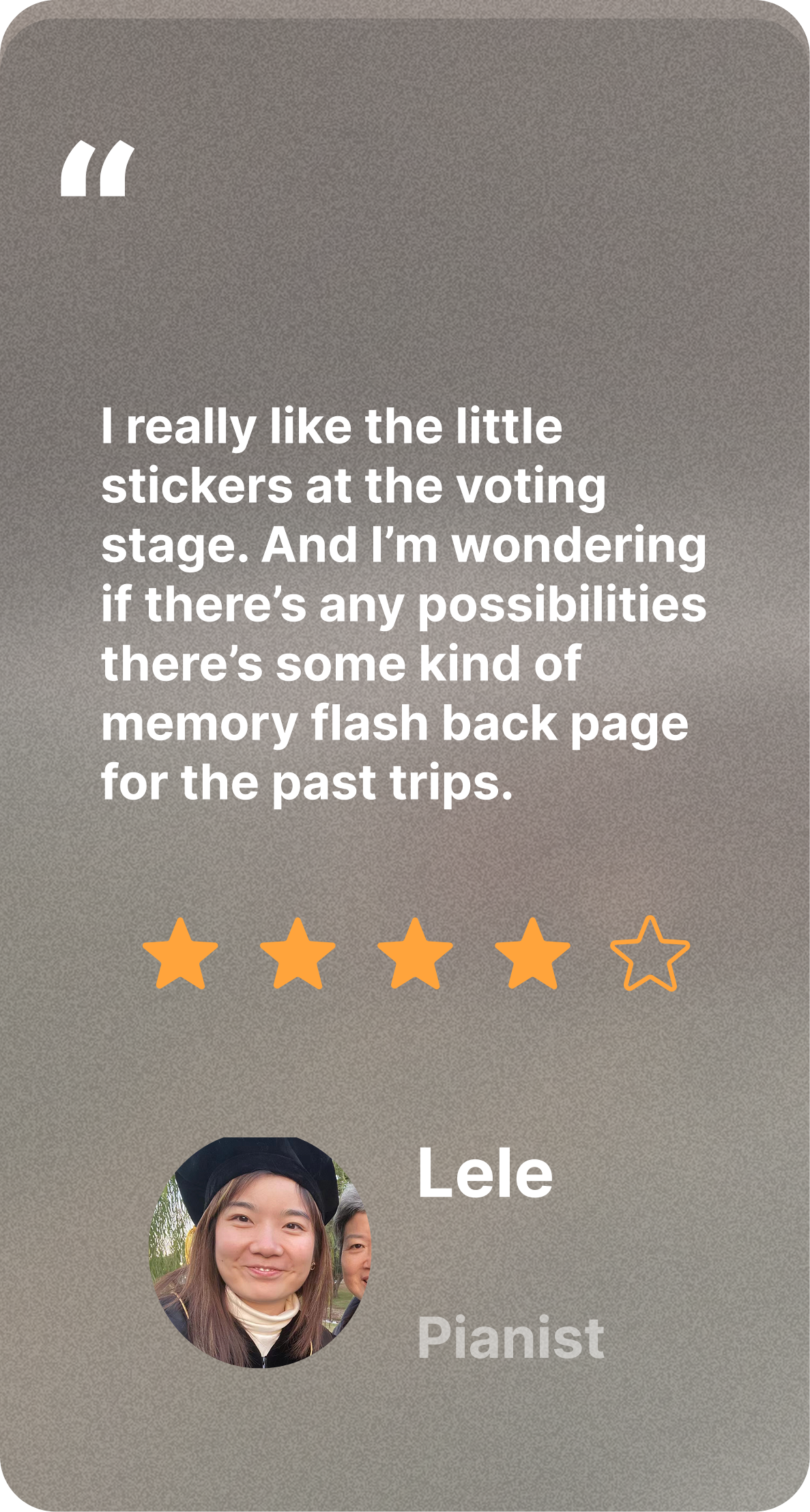
I conducted usability testing with participants from the original research pool, asking them to complete three scenarios: create a convoy, propose a stop, and check on group members' locations. The feedback was overwhelmingly positive on the real-time map and stop-voting features, while surfacing useful improvements to the onboarding flow.
What I Learned
Designing Convoy taught me that the hardest coordination problems are the ones people have normalized. Everyone I interviewed had learned to live with road trip friction — nobody expected it to be better. Making that latent frustration visible through research was the most important step.
It also reinforced a principle I believe in deeply: design for the worst moment in the experience, not the best one. A road trip app needs to be usable when you're tired, behind the wheel, and the other car just took a wrong exit — not just when you're calmly planning from the couch.
Next Project
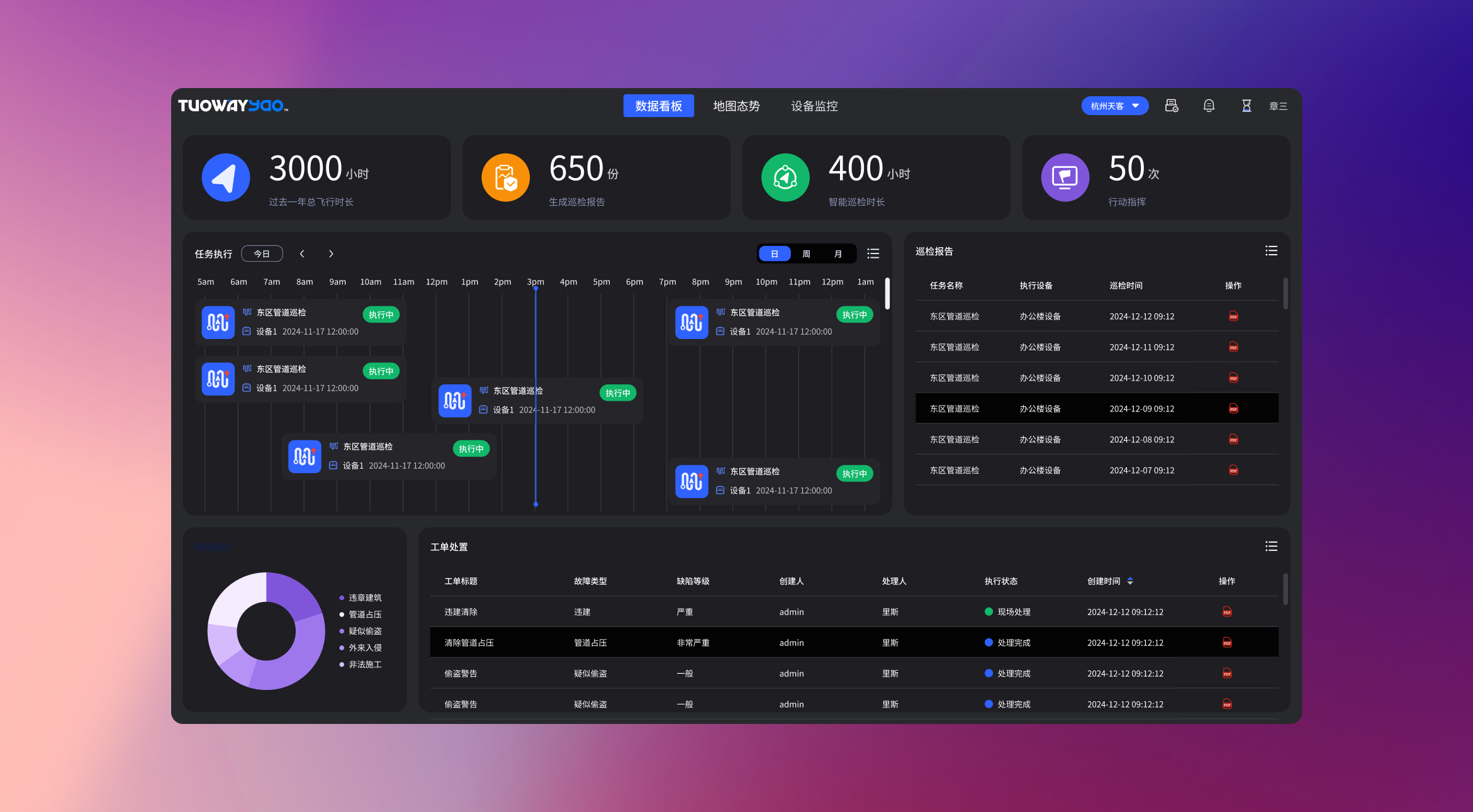
One-stop UAV Operation Platform
A full-stack UX internship designing drone fleet management tools for enterprise clients.