
Aura
Wearable Technology for Postpartum Depression Relief
Background
Aura is a smart ring interface designed for intuitive gesture control and health monitoring. It bridges the gap between physical movement and digital interaction, offering a seamless experience for daily life.
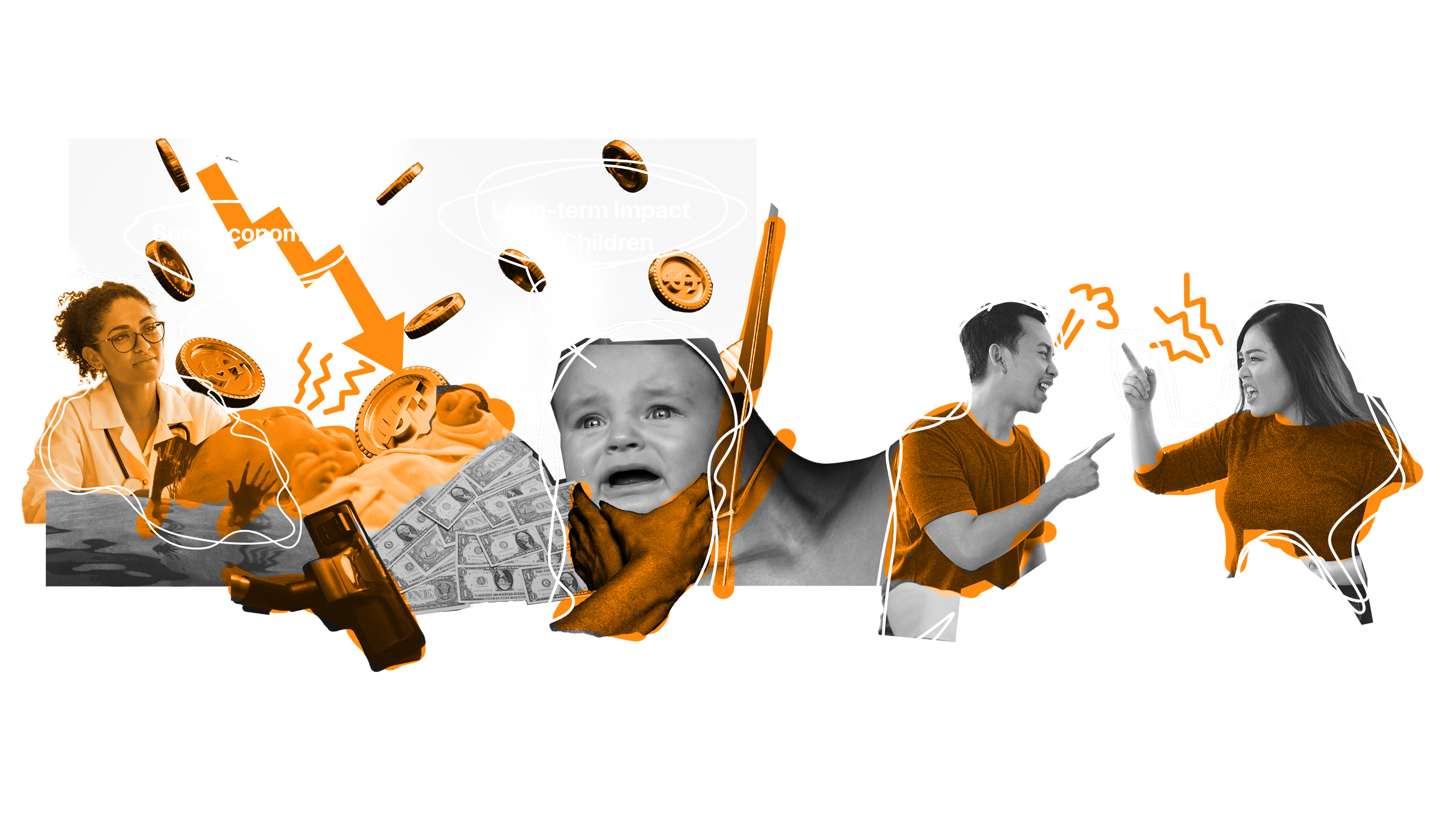
Social Impact
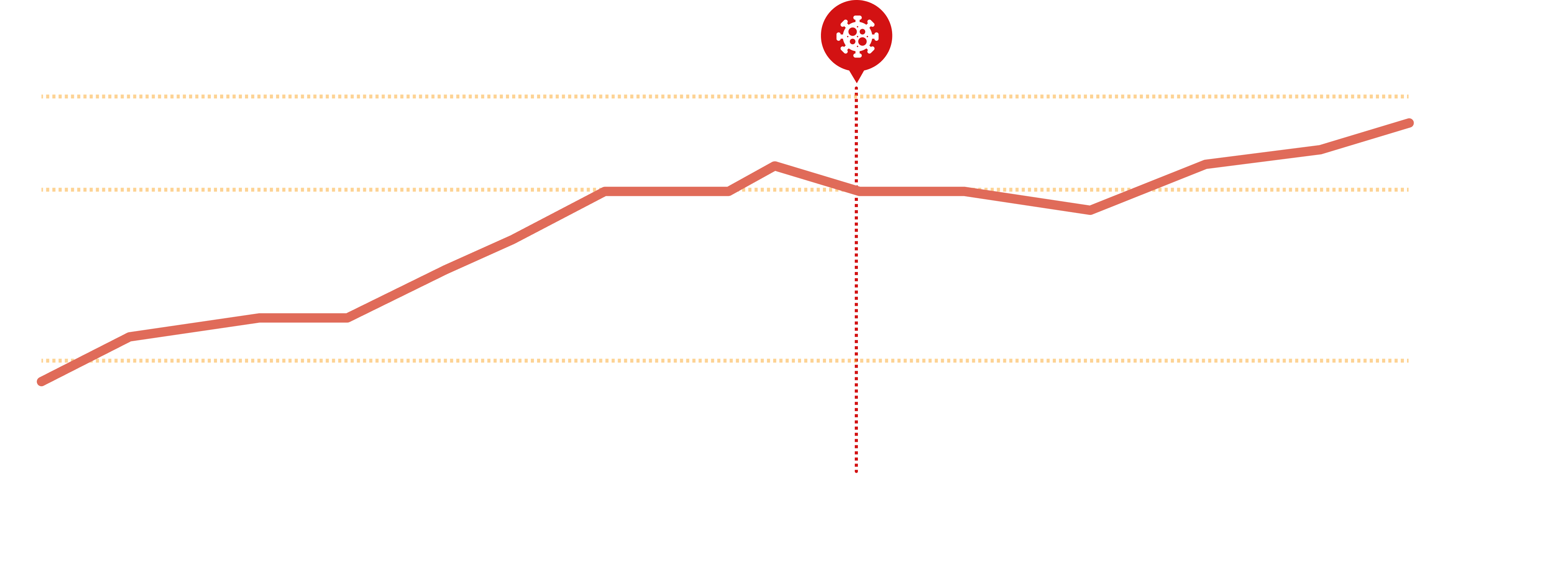
Share of Women Global Postpartum Depression Population Over the Years
The share is between 10% and 14% and it kept growing from 2009 to now.
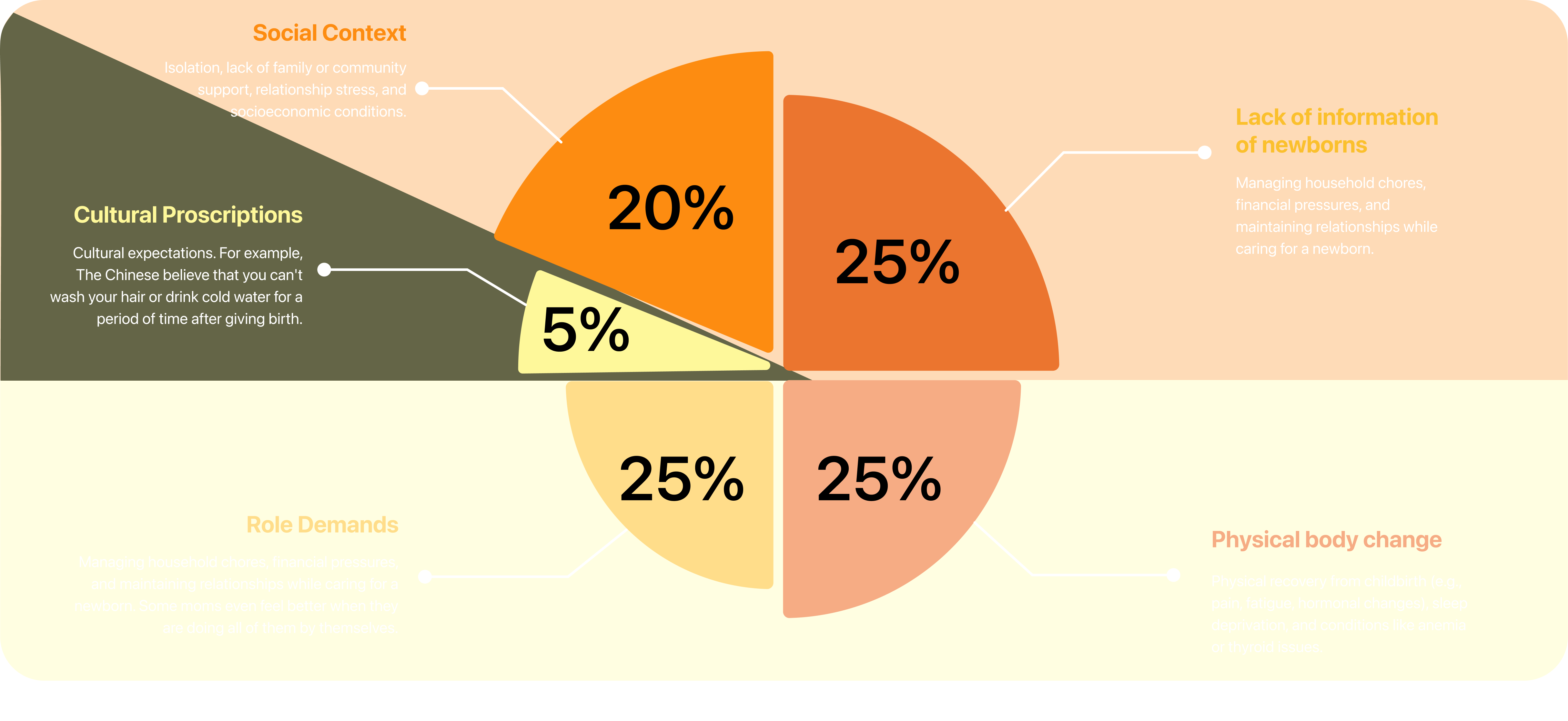
Reasons
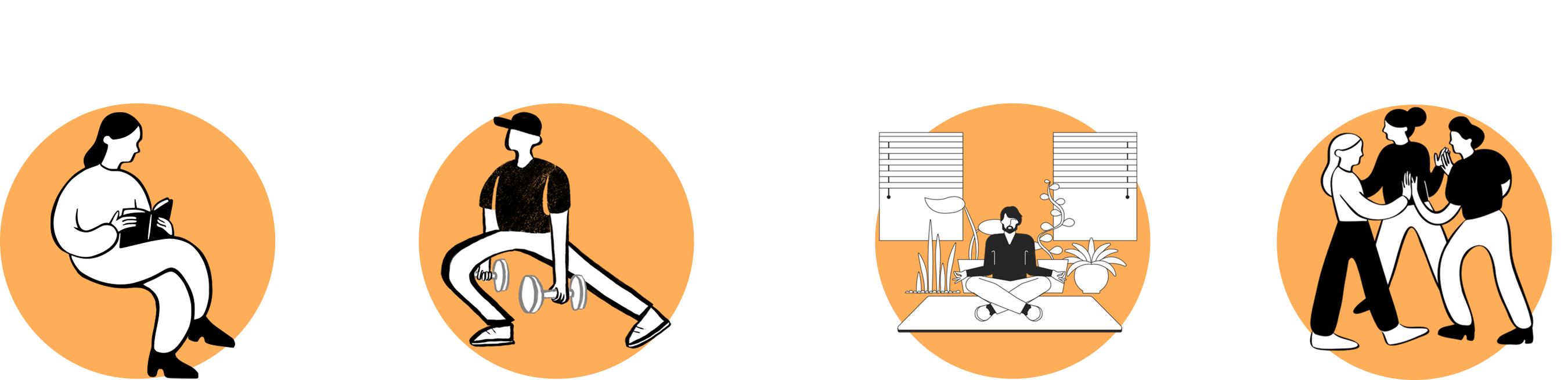
What relieves postpartum depression?
User Research
Interview Questions
1. How did you discover postpartum depression?
2. What situations make you feel the most anxious?
3. When did it feel like you realized you were moving into a good direction?
4. What was your family's attitude toward your postpartum depression?

Jaden
27 years | Developer
Answer
- It was a while ago when it was time for the baby to take a bath at night, my mom and I had a big fight about it. At the time I was thinking: I really don't want to give the baby a bath, stop bothering me. Then I started to cry with no sign, I thought I was a failure, I felt that I wasn't a good mother either!
- When someone tried to control me when they think I'm wrong at taking care of my own baby.
- When my friends come to me to complain about their problems.
- They were shocked that I can cry in any situations.

Amy
28 years | Housewife
Answer
- I think it was something really small, I don't remember particularly. I remember I just lit up. I feel like I was out of control.
- When someone is criticizing my way of taking care of baby.
- After my family started to realize they need to help me out. They took care a lot of things with my baby and my feelings.
- As soon as I mentioned postpartum depression to my husband, he thought I shouldn't have.
Ideation Development
Ideation Process
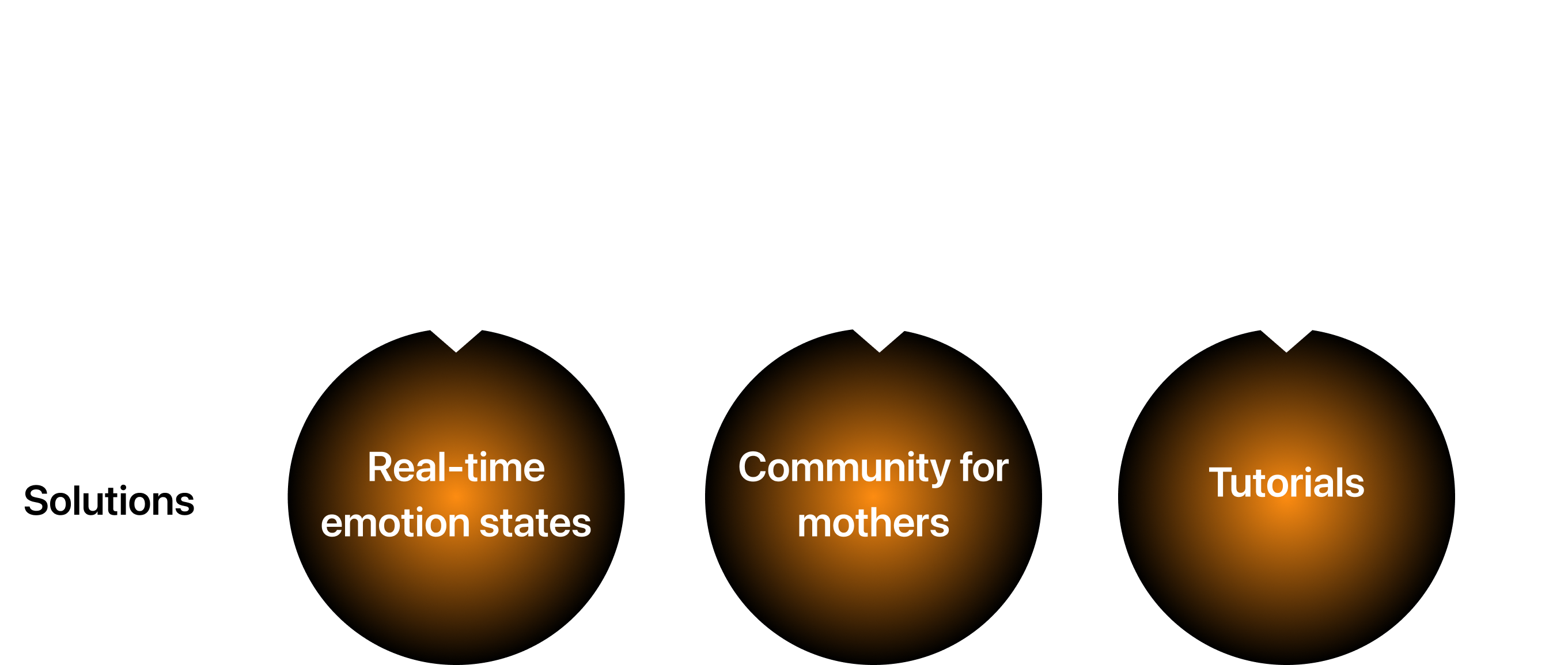
Colors can visualize emotions
Warm colors (RED, ORANGE, and YELLOW) are generally thought to evoke feelings of happiness, optimism, energy, and passion. They can also be associated with excitement, danger, and anger.
Cool colors (BLUE, GREEN, and PURPLE) are often described as calm, but can also call to mind feelings of sadness or indifference. They can also be associated with creativity, mystery, and luxury.


Functions
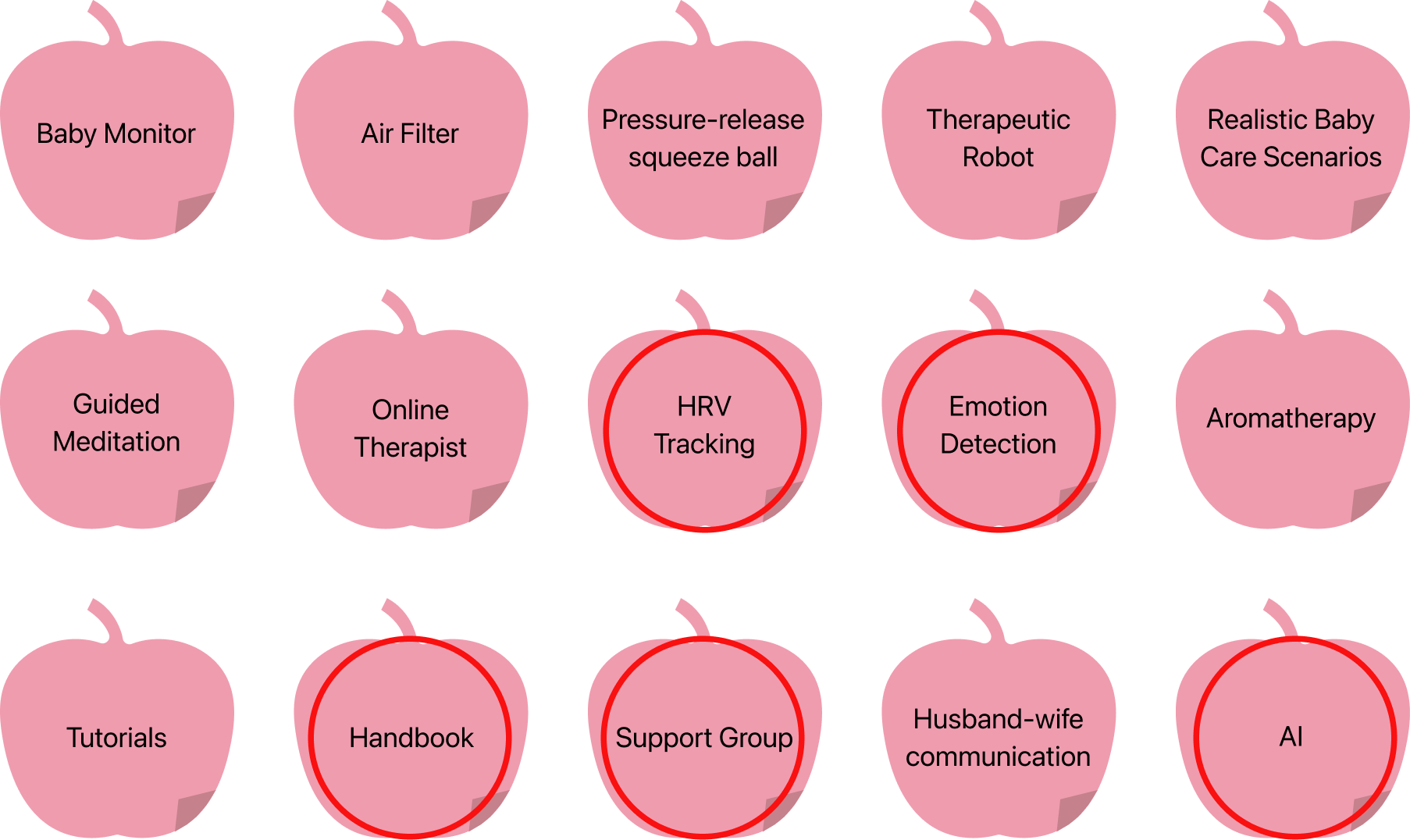
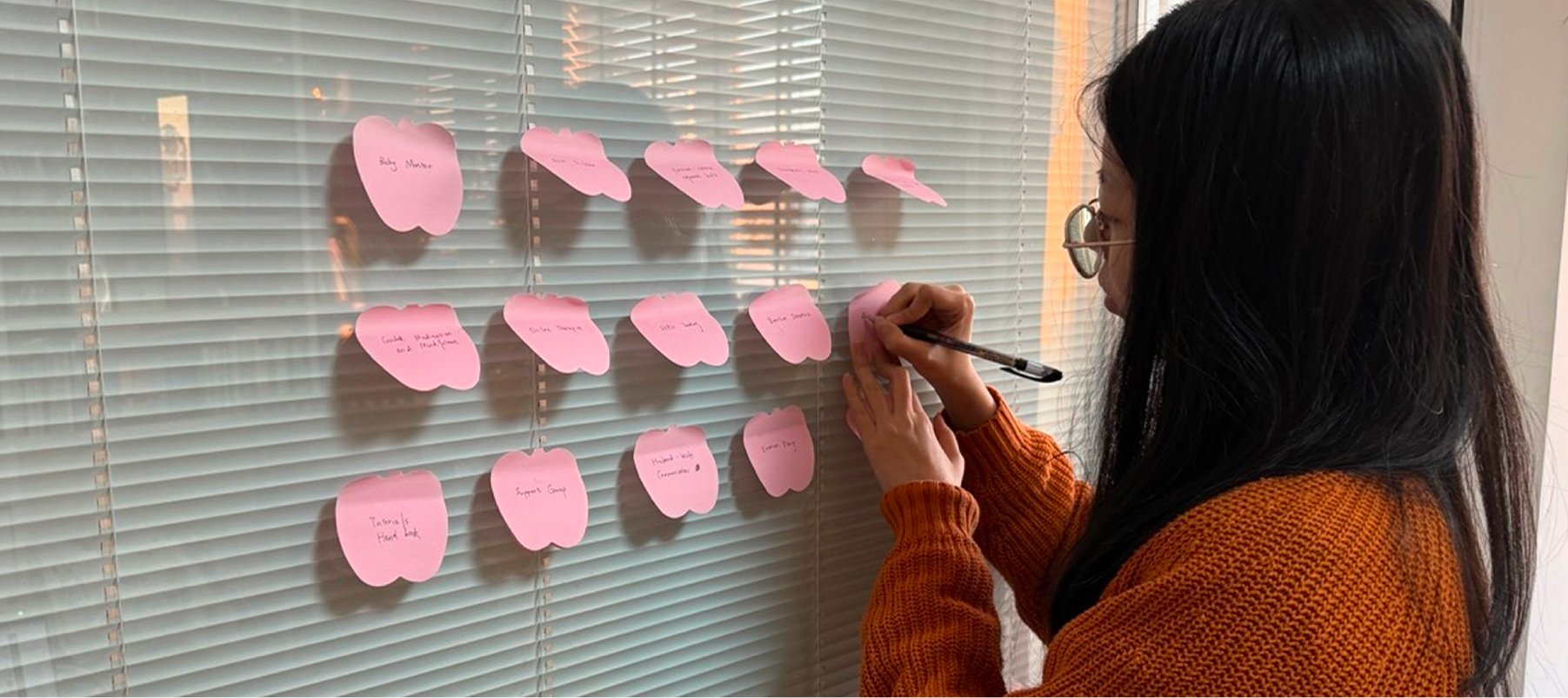
I listed all possible functions and items of the app
Design Process
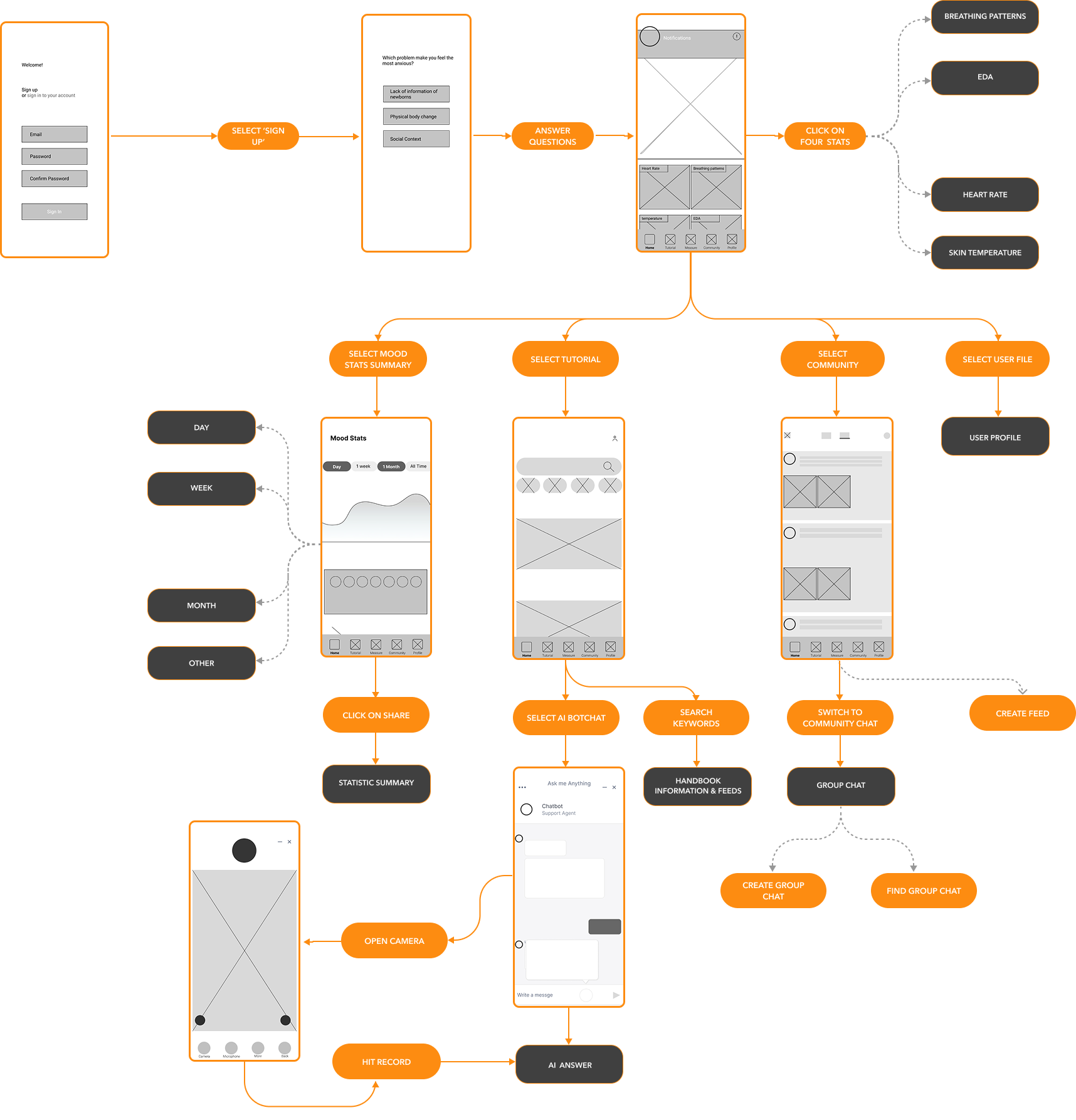
User Flow
High-fi Screens
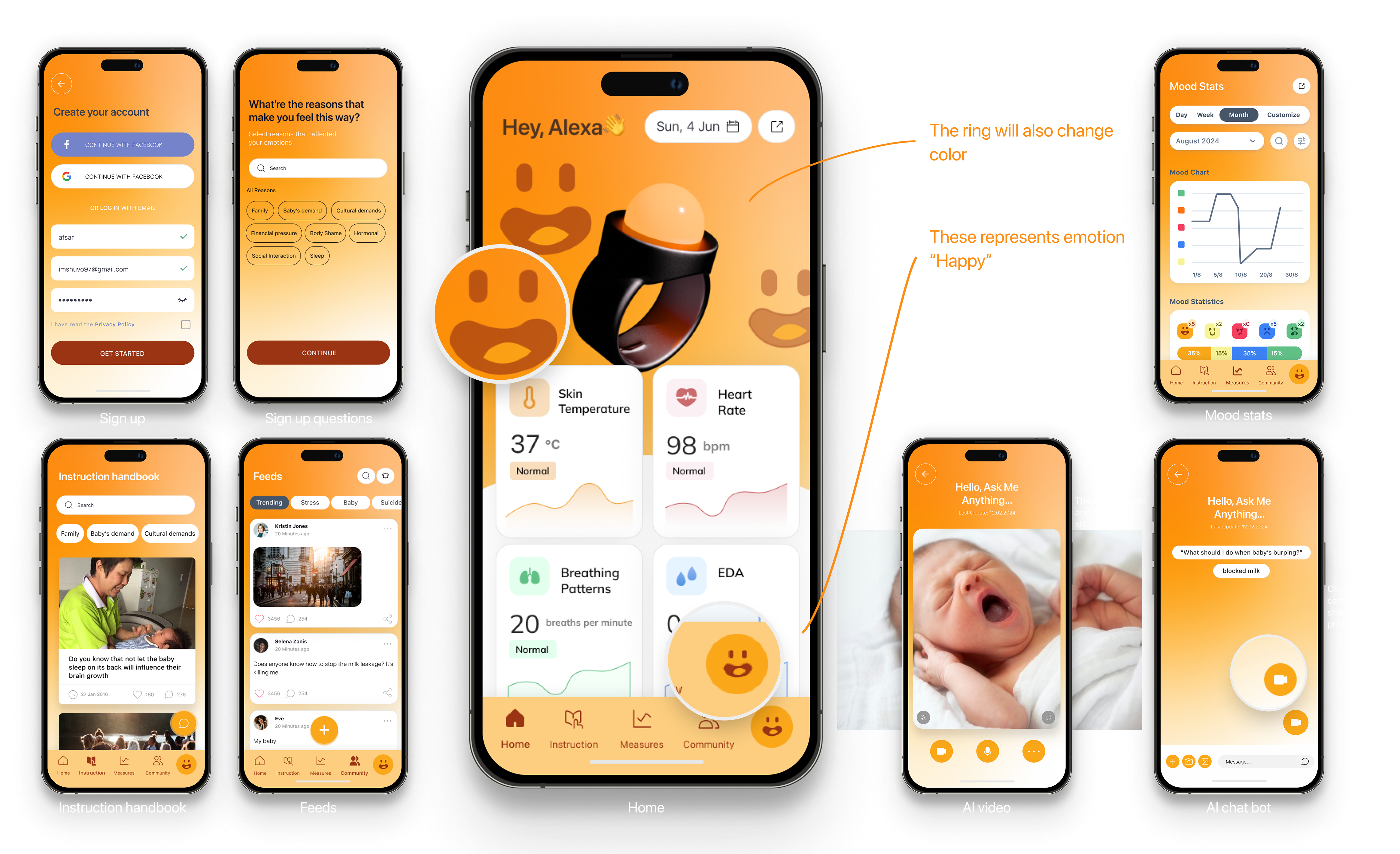
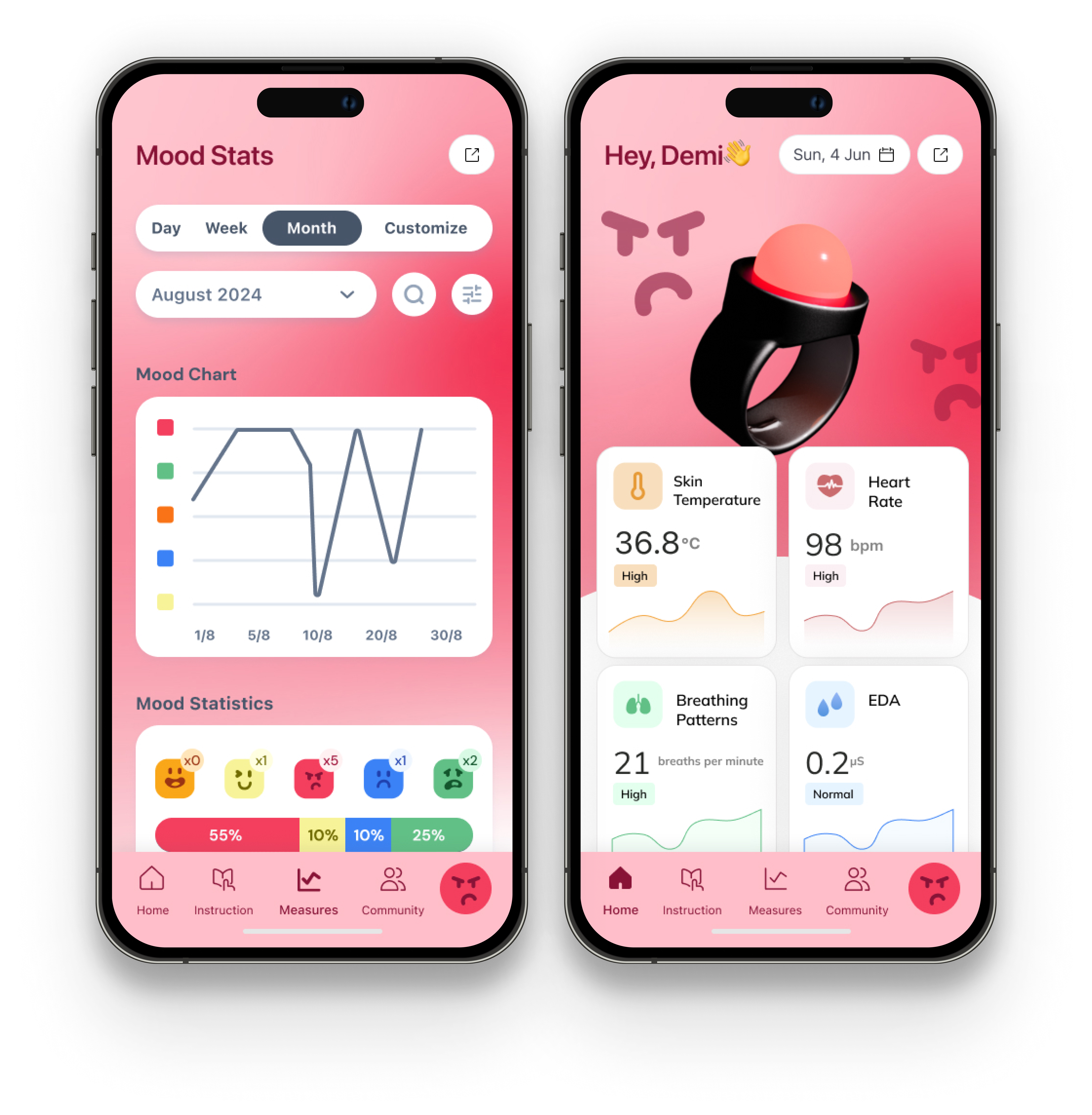
The app reacts when the ring detects that the user is angry, providing immediate intervention options.
Explore View
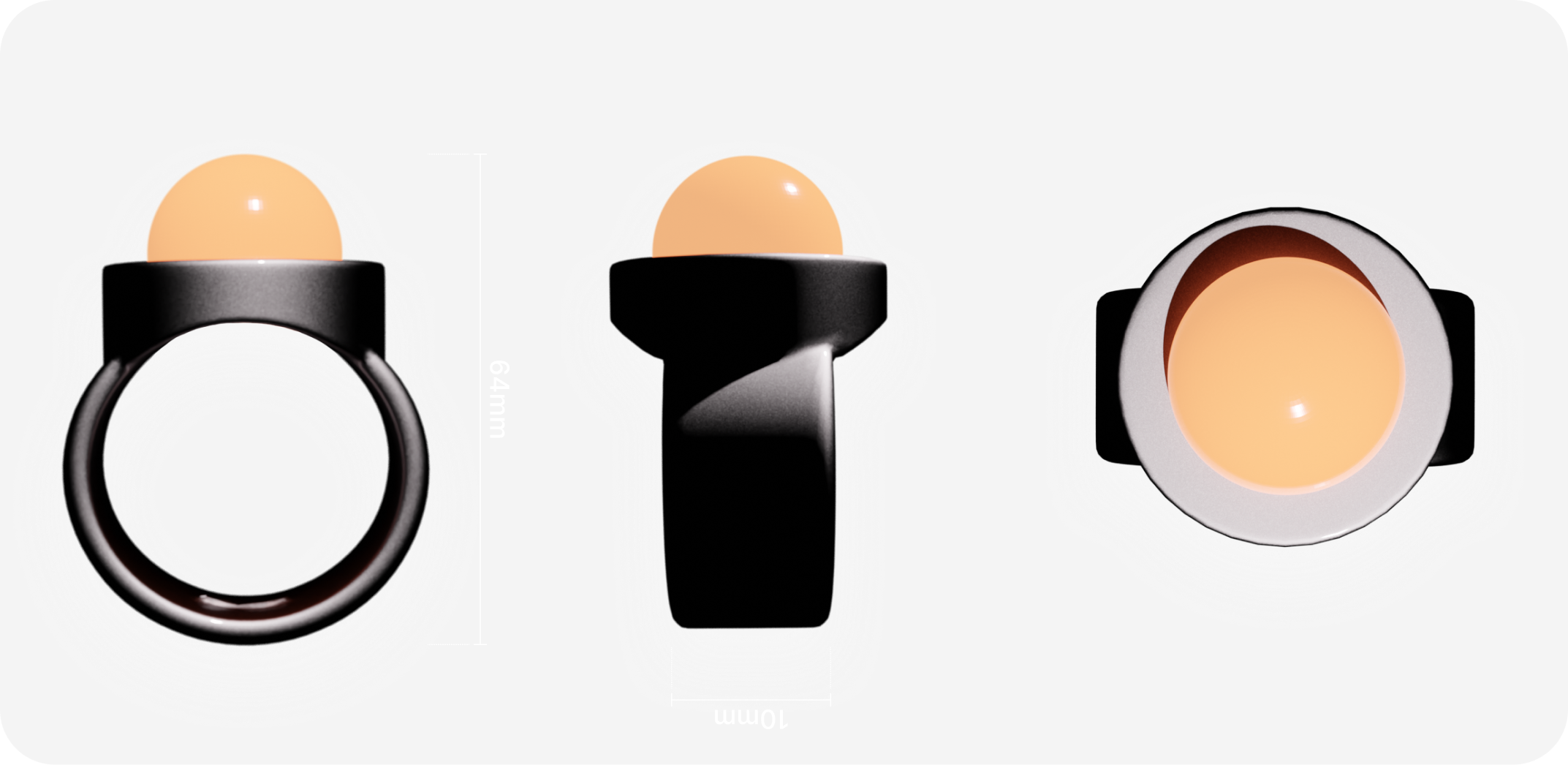
Code
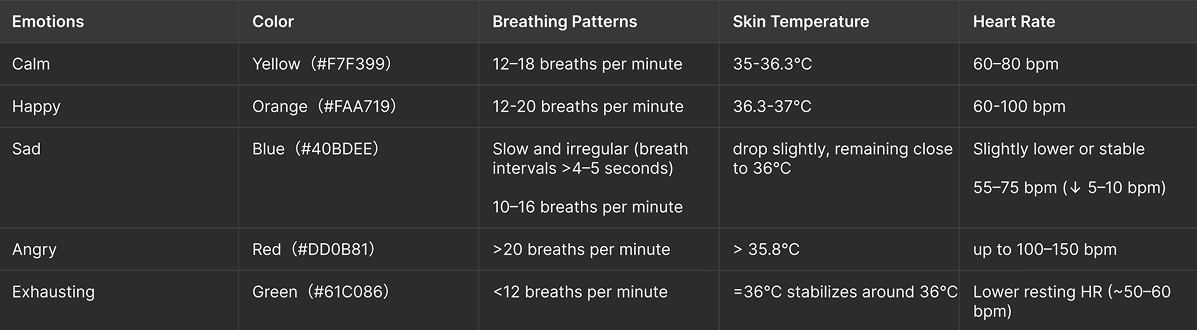
I created a display that detects user's 5 emotions using Python.
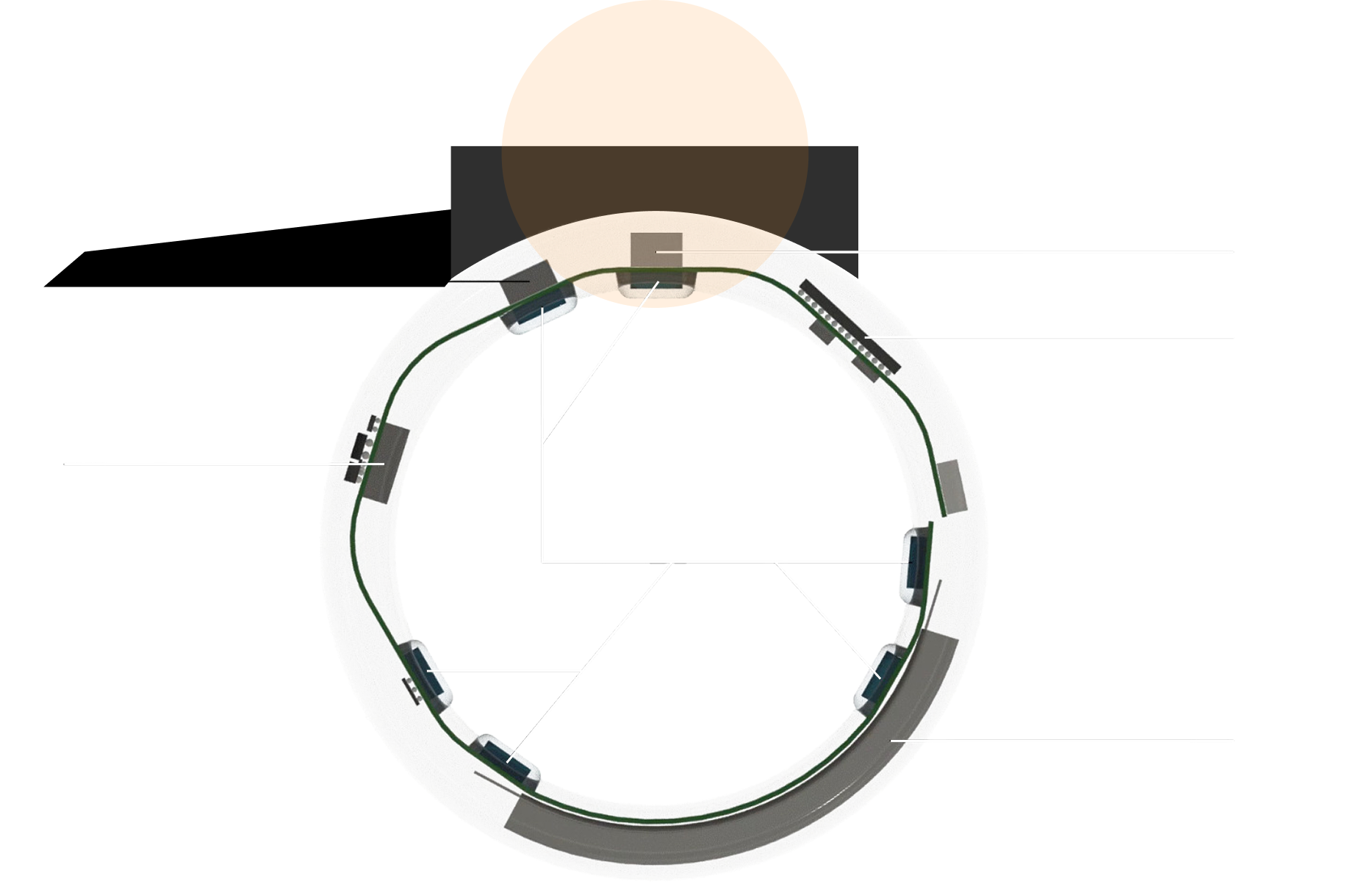
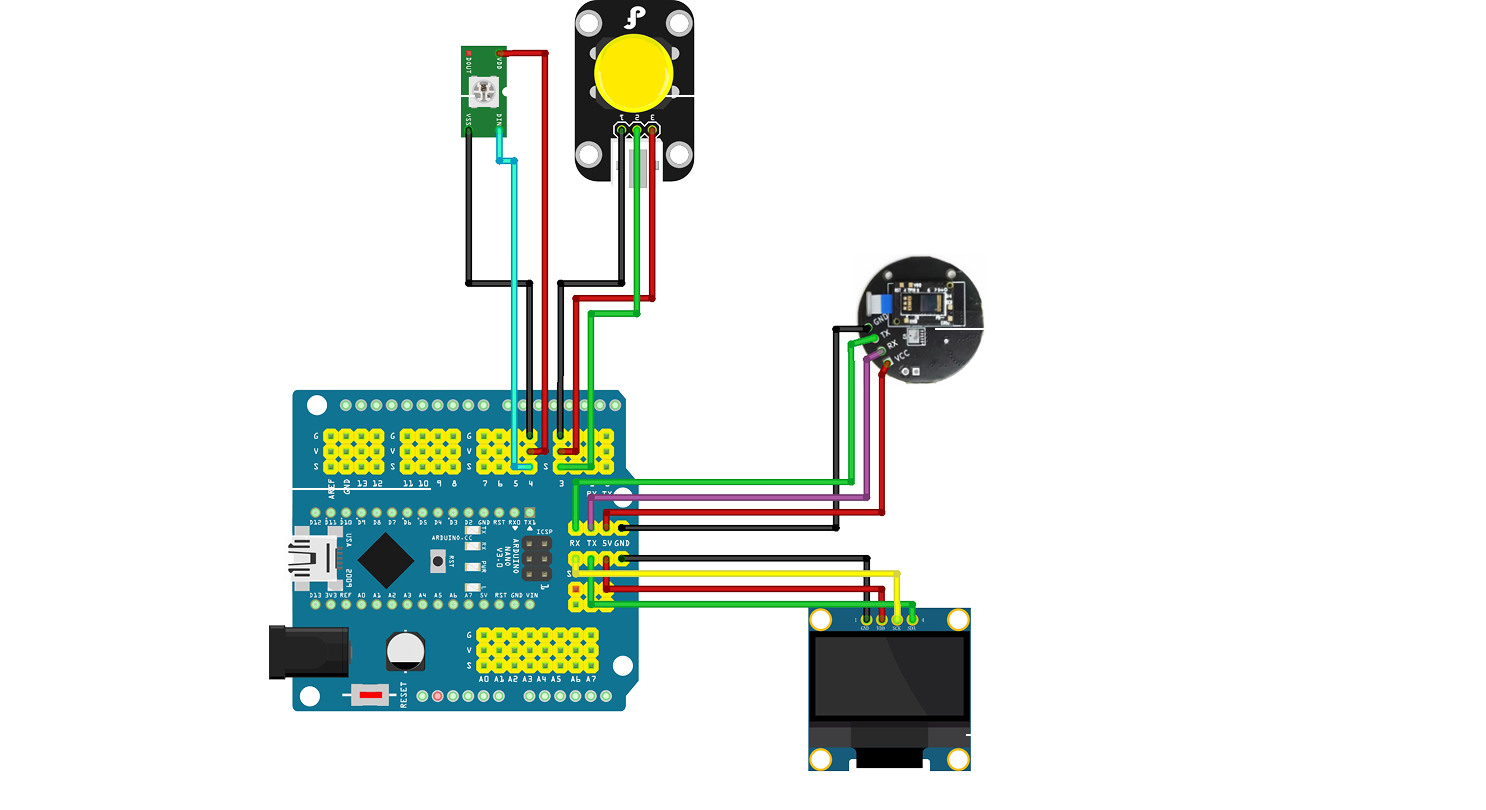
Schematic
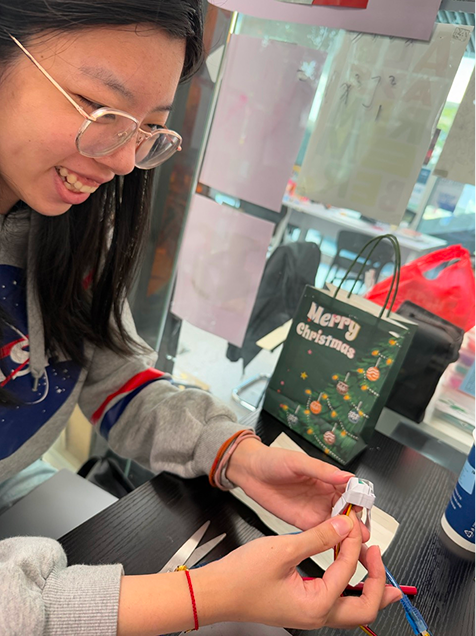
Production Process
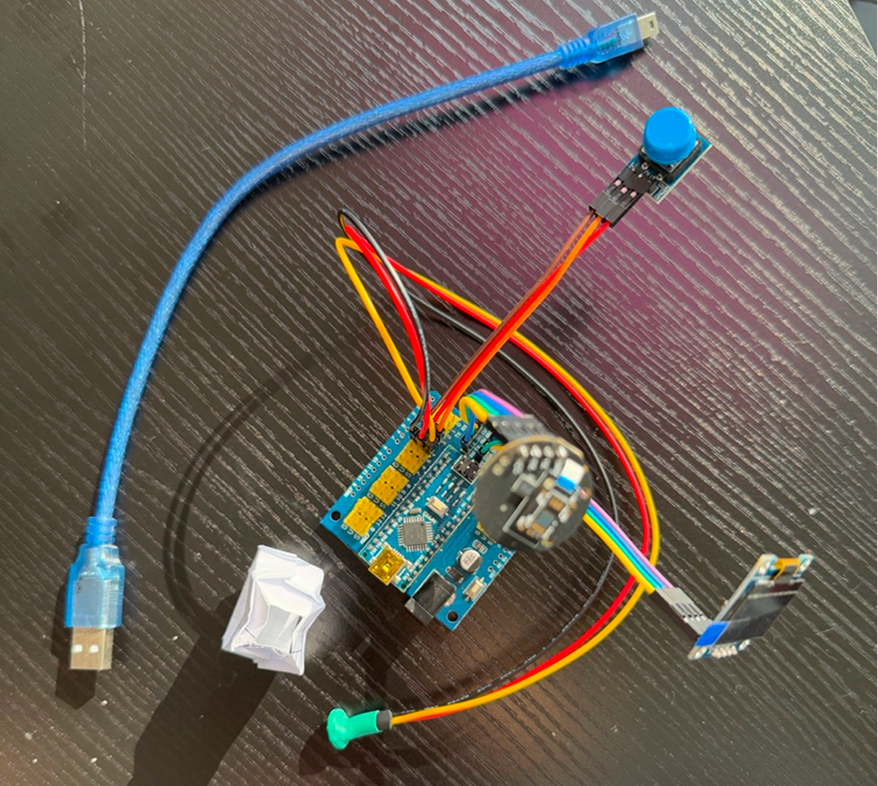
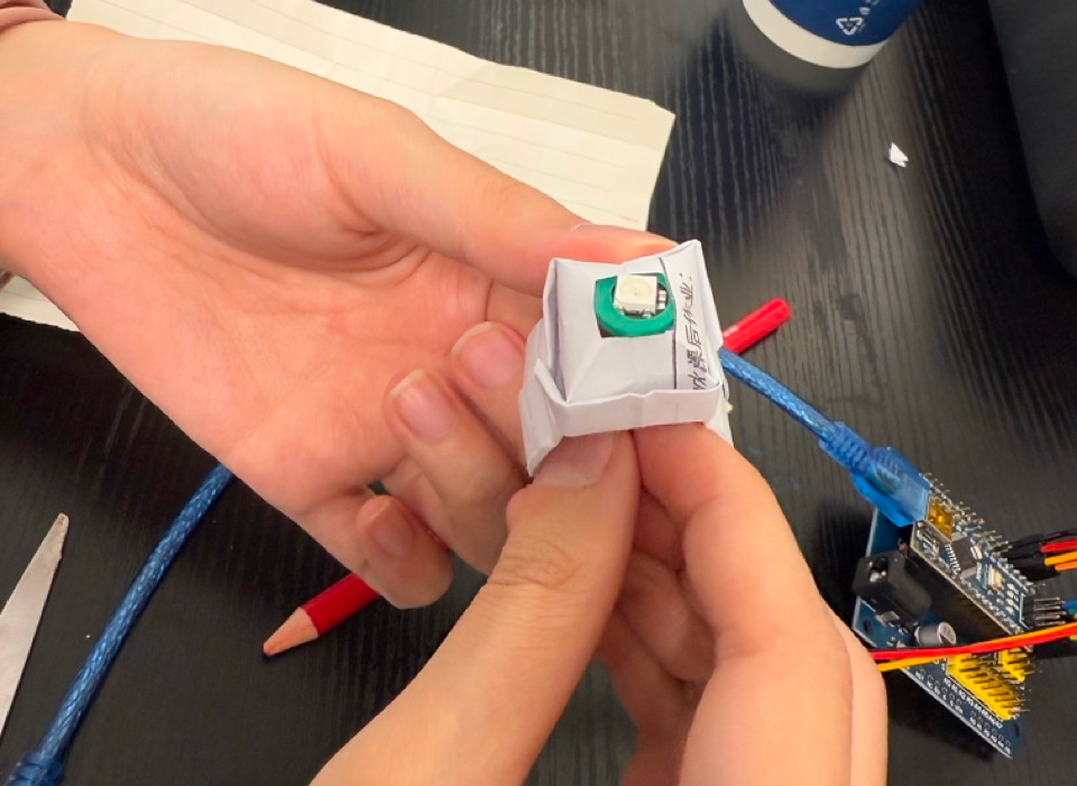
Run Tests
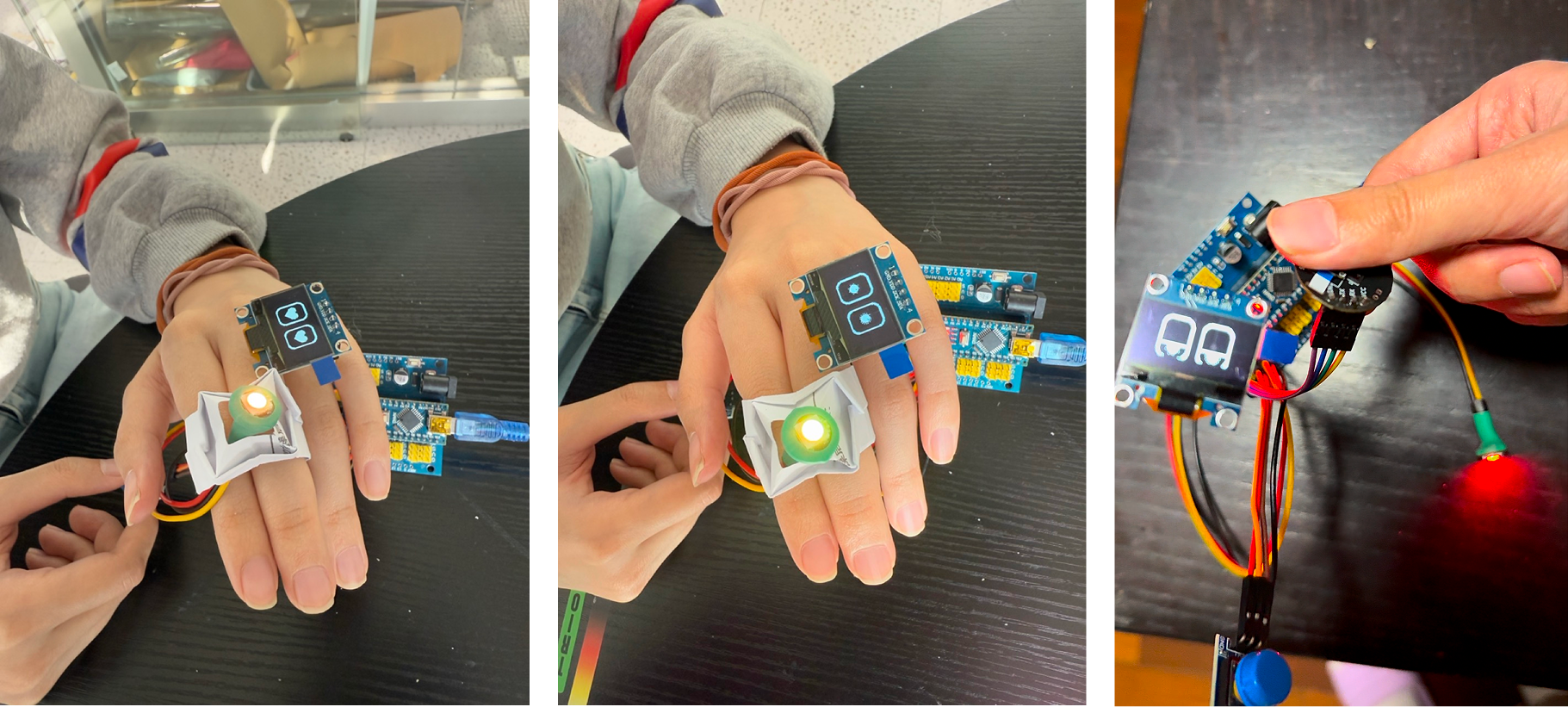
I tested the device by connecting the code with the device. When I made a happy face, the "happy" icon showed up on the display. When I made a calm face, the "calm" icon showed up on the display. When I made an angry face, the "angry" icon showed up on the display.
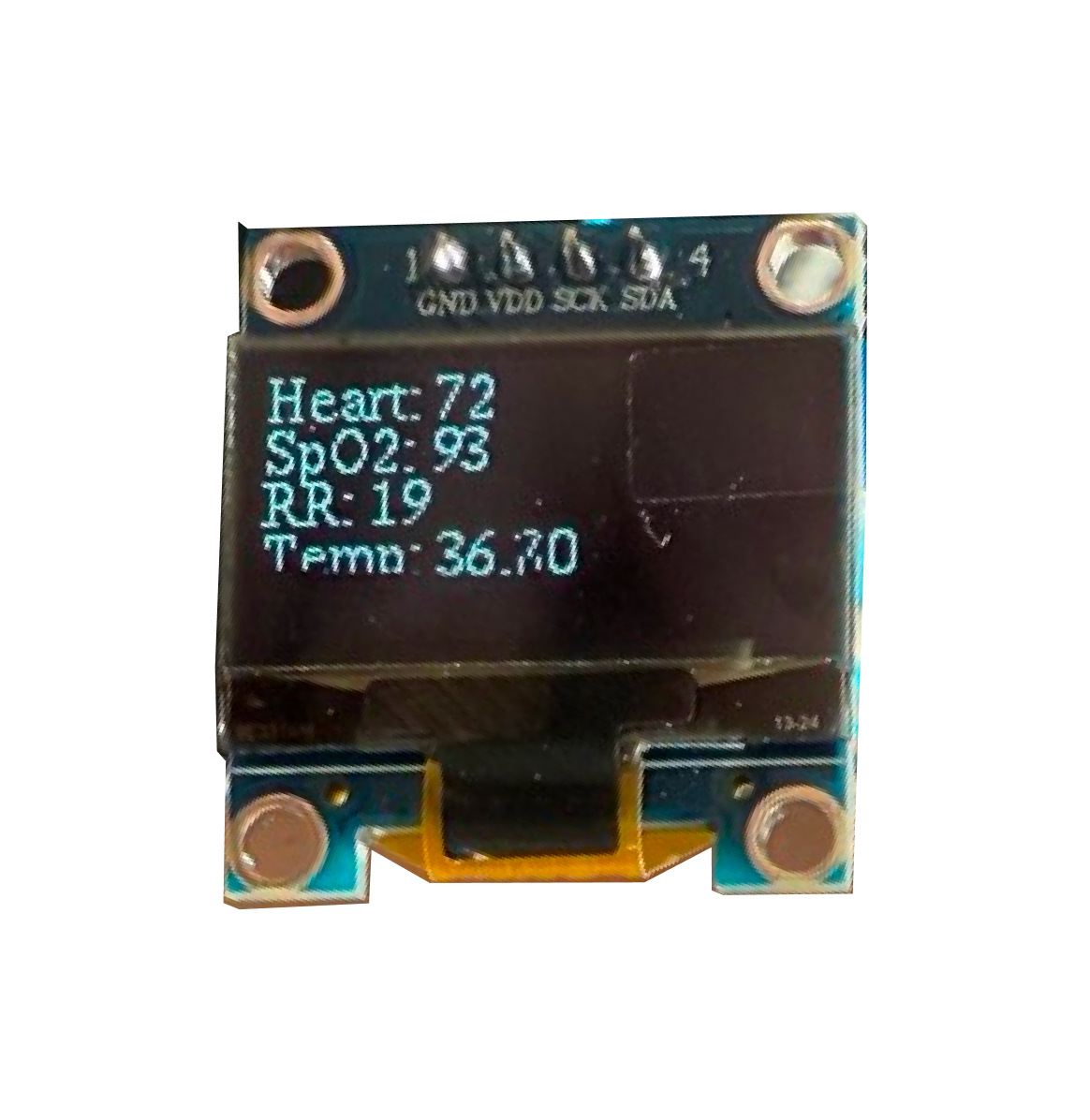
The display module page1 shows:
- Heart rate
- SpO2
- Breathing Pattern
- Temperature
Closing
Reflections
Postpartum depression (PPD) is a prevalent and potentially severe mood disorder that affects more than 20 million women annually worldwide. Exposure to postpartum depression places infants at risk for delays in cognitive, motor, and language development. PPD can also strain family relationships and increase the risk of suicide. I designed Aura as a wearable technology to provide relief for mothers facing this depression, aiming to support them through one of the most vulnerable periods of their lives.
Future Improvements
While Aura addresses immediate relief through gesture-based interactions and emotional tracking, there is more work to be done. Future iterations could focus on:
- Integrating more advanced bio-sensors for real-time physiological monitoring to predict depressive episodes earlier.
- Expanding the support network to include direct connection with healthcare professionals and peer support groups.
- Refining the physical design to be even more discreet and comfortable for 24/7 wear, ensuring mothers feel supported without stigma.
- Conducting longitudinal studies to clinically validate the effectiveness of the device in reducing PPD symptoms over time.